Food Cost & Margins
Food cost is the number that tells the truth about your restaurant. Revenue lies — a packed Saturday can hide a Tuesday that's bleeding cash. Labor costs fluctuate with the schedule.
But food cost percentage sits there on the page and tells you exactly how much of every dollar you're handing back to your suppliers. The formula is simple. What you spent on food, divided by what you sold.
Most concepts need that number between 28 and 35 percent to survive. The problem is that almost nobody calculates it often enough to catch the drift before it becomes a crisis. These videos cover the real mechanics — how to run the formula, how to price a menu that protects your margins, and what to do when the numbers start moving in the wrong direction.
The Drift Nobody Catches in Time
Here's how it usually goes. You open. The menu gets priced on instinct and a rough sense of what the neighborhood will pay.
For a while, the register fills up and nobody questions the math. Then your chicken supplier raises prices by eight percent. A new prep cook starts overportioning the salmon.
A popular special runs for three weeks and never gets costed. Each one is small. Together they move your food cost from 31 to 37 percent, and you don't notice until the quarterly P&L arrives and the money isn't there.
The fix is boring. Cost your recipes. Update the costs when your invoices change.
Weigh your portions. Calculate food cost weekly, not monthly — monthly is an autopsy. Weekly gives you time to adjust.
The Drift Nobody Catches in Time
Here's how it usually goes. You open. The menu gets priced on instinct and a rough sense of what the neighborhood will pay.
For a while, the register fills up and nobody questions the math. Then your chicken supplier raises prices by eight percent. A new prep cook starts overportioning the salmon.
A popular special runs for three weeks and never gets costed. Each one is small. Together they move your food cost from 31 to 37 percent, and you don't notice until the quarterly P&L arrives and the money isn't there.
The fix is boring. Cost your recipes. Update the costs when your invoices change.
Weigh your portions. Calculate food cost weekly, not monthly — monthly is an autopsy. Weekly gives you time to adjust.
“You don't go broke all at once. You go broke a half-percent at a time.”
The Numbers, the Formulas, and the Operators Who Use Them
264 videosVideos on food cost calculation, menu pricing strategy, margin analysis, and the franchise economics behind the biggest brands in food.
10 videos tagged “Inventory & Waste”

Square vs. Square for Restaurants: Here's What You Need To Know
You're either running the numbers or the numbers are running you, and your POS system sits right at the center of that fight. This breakdown cuts through Square's marketing to show you exactly what each tier costs versus what it actually does for a working kitchen — the difference between tracking your chicken breast inventory and wondering why you're bleeding money on portion control. Anyone who's tried to reconcile sales reports at 2 AM knows that paying for the restaurant-specific features isn't overhead, it's survival.
Restaurant Management Tip - How to Determine Restaurant Profit Margin #restaurantsystems
You're either running the numbers or the numbers are running you into the ground, and David breaks down profit margins like he's teaching knife cuts — precise, methodical, no wasted motion. Most operators chase revenue while their margins bleed out through food waste, overstaffing, and that one server who can't sell a drink to save their life. The real lesson here isn't the formula — it's learning to read your P&L like you read a dinner rush, watching every line item the way you watch the pass during a Saturday night push.

Food Cost | How to Calculate Food Cost | Hotel Inventory |Food Cost Formula|How to Start Restaurant
Food cost isn't sexy until you're watching your margins disappear into portion creep and waste bins overflowing with yesterday's special. Chef Bhandari breaks down the math that separates operators who last from those who fold — the difference between knowing your numbers and hoping they work out. You're either running the percentages or they're running you into the ground.
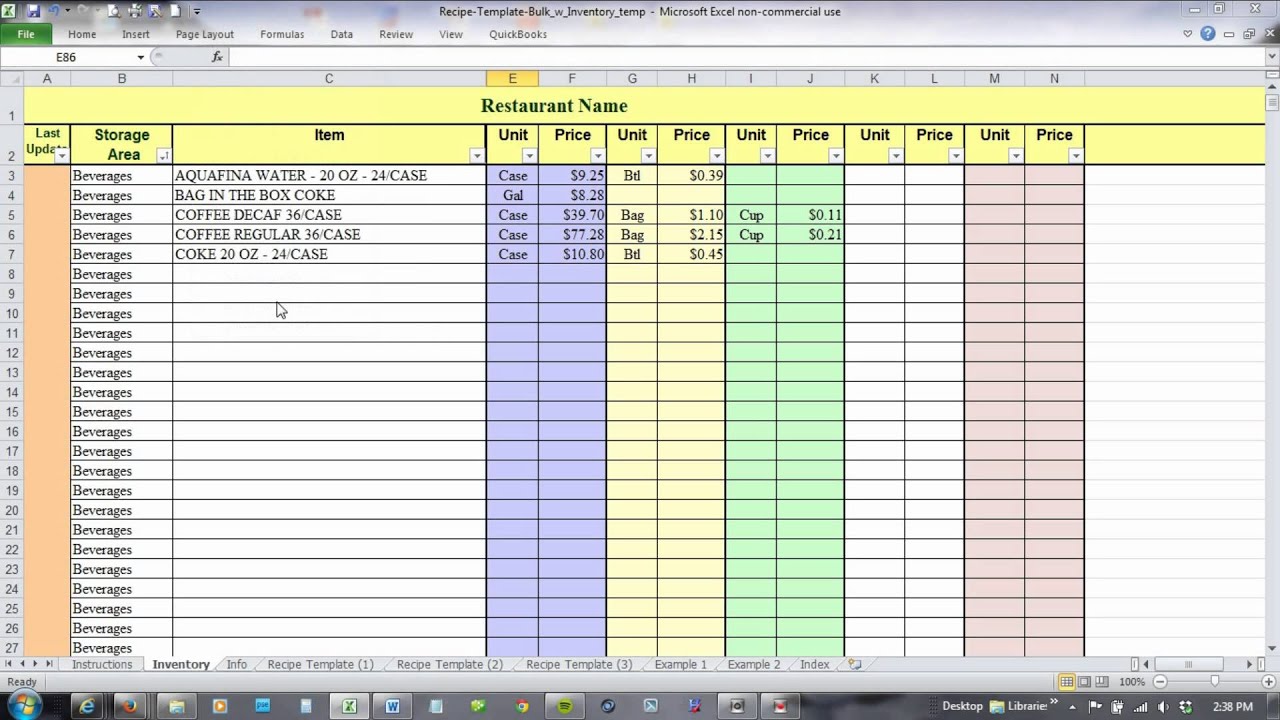
Using Excel for Recipe Costing and Inventory Linking
You're either running the numbers or the numbers are running you, and Buchanan knows which side of that equation keeps the lights on. His Excel setup links recipe costs directly to inventory levels — no more guessing if that 32-ounce ribeye special is actually making money when beef prices jump overnight. Anyone who's watched food costs creep from 28% to 35% without knowing why will recognize the quiet desperation this solves.

How To Set Up A Restaurant In 8 Lacs Or Less
Eight lacs sounds like a fortune until you break it down: equipment, permits, three months of rent, enough inventory to not 86 everything by week two. Gopal Kamath walks through the math that most first-time operators discover the hard way — every rupee has a job before you even flip the sign to open. You're either planning for the burn rate or the burn rate is planning for you.

Restaurant Owner: Lower Food Cost with a Key Item Inventory Report
You're either running the numbers or the numbers are running you, and most operators figure this out around month three when the walk-in is full but the bank account isn't. This breakdown of key item inventory reporting cuts straight to what matters: knowing exactly where your money walks out the back door every shift. The Restaurant Boss strips away the spreadsheet paralysis and shows you how to track the six items that make or break your food cost — not the 200 SKUs gathering dust in your POS system. Anyone who's watched their prime costs creep past 60% knows this isn't theory.

Restaurant Management Tip - How to Calculate Restaurant Cost of Goods Sold #restaurantsystems
You're either running the numbers or the numbers are running you, and COGS is the number that separates restaurants that make it from the ones that close quietly on a Tuesday. RestaurantSystemsPro walks through the actual calculation — beginning inventory plus purchases minus ending inventory divided by total sales — the kind of math that looks simple until you're doing it weekly with fluctuating protein costs and a prep cook who can't count portions. Anyone who's watched food cost creep from 28% to 35% without noticing knows exactly why this matters. The formula is basic, but the discipline to track it religiously is what keeps the lights on.

How to control food cost | Sanjay Jha | 5 golden rule to control food cost | Food cost control
You're either running the numbers or the numbers are running you — Jha breaks down five systems that keep food cost from bleeding you dry. Watch a restaurant manager who's clearly counted every ounce and tracked every cent walk through the fundamentals: portion control that actually sticks, vendor negotiations that save real money, and inventory systems that catch waste before it kills your margins. Anyone who's watched their food cost creep from 28% to 35% while wondering where the hell it all went needs these five rules tattooed on their office wall.

Learn Food Cost In Ten Minutes | Food Cost Calculation | Food Cost Formula | Inventory
You're either running the numbers or the numbers are running you, and Chef Dheeraj breaks down food cost calculation like your life depends on it — because it does. Ten minutes to understand the math that separates restaurants that make it from the ones posting "permanently closed" signs. Anyone who's watched their margins disappear into the walk-in knows this isn't theory.

7 Golden Rules To Control Cost At RESTAURANT,Cloud Kitchen|Food Cost Control|How To Start Restaurant
Seven rules that sound simple until you're staring at a 38% food cost and wondering where the money went. Bhandari breaks down the math that separates restaurants that survive from those that don't — portion control, waste tracking, and the inventory systems that actually work when you're running 200 covers on a Saturday. You're either controlling your costs or your costs are controlling you.
Every time a supplier raises a price, your recipe costs change. If you're not updating them, your menu prices are fiction. Second: portion control that's enforced, not suggested.
The difference between a 30 and a 36 percent food cost is often one cook who eyeballs the protein instead of weighing it. Scales are cheaper than going under. Third: a waste log that gets used.
Not a punishment system — a diagnostic one. When you know where product disappears, you can fix the cause instead of guessing at it.
The numbers here connect to everything else. Kitchen Systems covers the workflow and prep structures that prevent waste before it happens. When the margins collapse entirely, Restaurant Failures shows you what the end looks like — and why it was usually avoidable.