
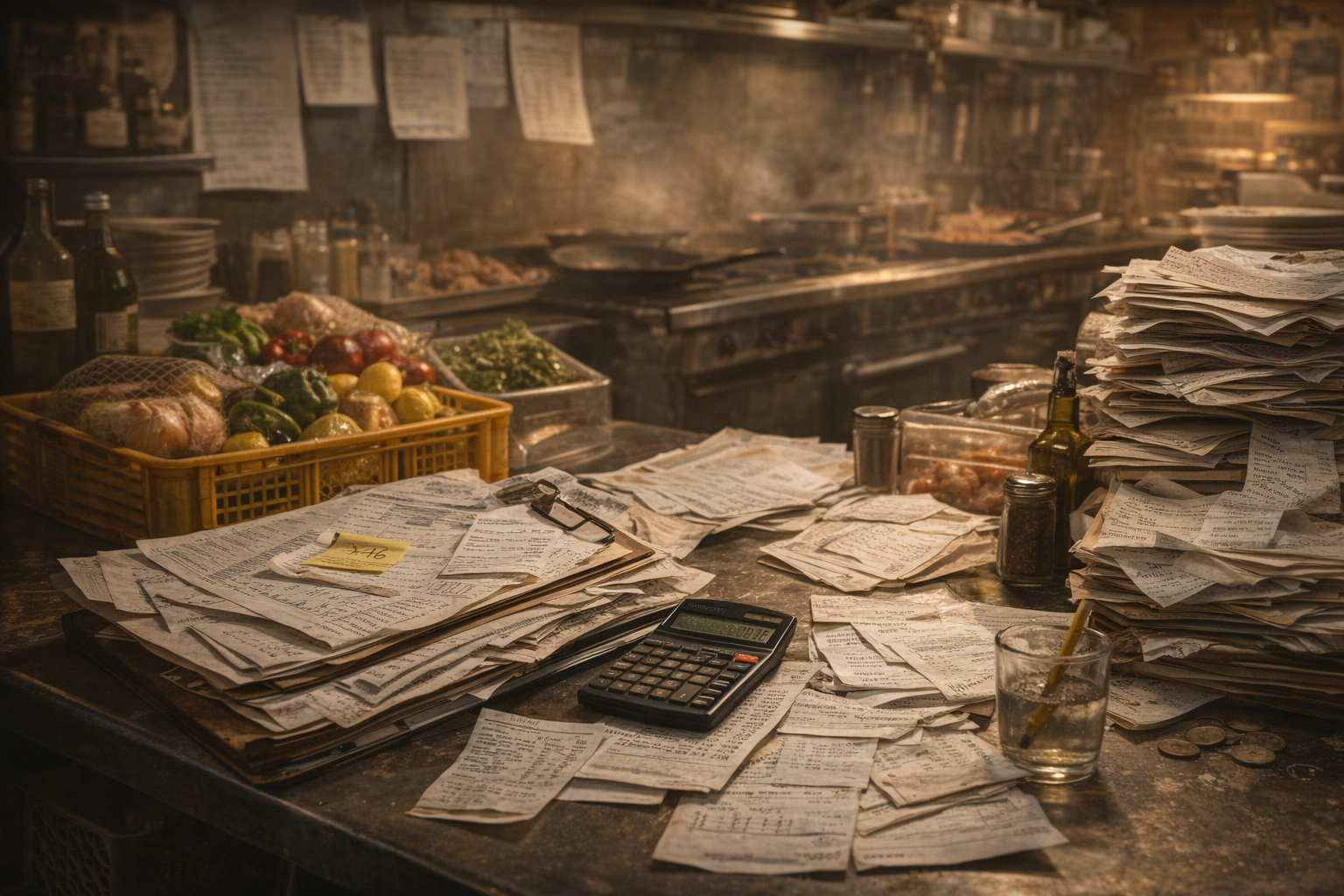
Food Cost & Margins
Food cost is the number that tells the truth about your restaurant. Revenue lies — a packed Saturday can hide a Tuesday that's bleeding cash. Labor costs fluctuate with the schedule.
But food cost percentage sits there on the page and tells you exactly how much of every dollar you're handing back to your suppliers. The formula is simple. What you spent on food, divided by what you sold.
Most concepts need that number between 28 and 35 percent to survive. The problem is that almost nobody calculates it often enough to catch the drift before it becomes a crisis. These videos cover the real mechanics — how to run the formula, how to price a menu that protects your margins, and what to do when the numbers start moving in the wrong direction.
The Drift Nobody Catches in Time
Here's how it usually goes. You open. The menu gets priced on instinct and a rough sense of what the neighborhood will pay.
For a while, the register fills up and nobody questions the math. Then your chicken supplier raises prices by eight percent. A new prep cook starts overportioning the salmon.
A popular special runs for three weeks and never gets costed. Each one is small. Together they move your food cost from 31 to 37 percent, and you don't notice until the quarterly P&L arrives and the money isn't there.
The fix is boring. Cost your recipes. Update the costs when your invoices change.
Weigh your portions. Calculate food cost weekly, not monthly — monthly is an autopsy. Weekly gives you time to adjust.
The Drift Nobody Catches in Time
Here's how it usually goes. You open. The menu gets priced on instinct and a rough sense of what the neighborhood will pay.
For a while, the register fills up and nobody questions the math. Then your chicken supplier raises prices by eight percent. A new prep cook starts overportioning the salmon.
A popular special runs for three weeks and never gets costed. Each one is small. Together they move your food cost from 31 to 37 percent, and you don't notice until the quarterly P&L arrives and the money isn't there.
The fix is boring. Cost your recipes. Update the costs when your invoices change.
Weigh your portions. Calculate food cost weekly, not monthly — monthly is an autopsy. Weekly gives you time to adjust.
“You don't go broke all at once. You go broke a half-percent at a time.”
The Numbers, the Formulas, and the Operators Who Use Them
256 videosVideos on food cost calculation, menu pricing strategy, margin analysis, and the franchise economics behind the biggest brands in food.
3 videos tagged “Knife Skills”

How Executive Chefs Control Food Costs Like a Pro
You're either running the numbers or the numbers are running you, and most chefs figure this out around the third time they have to explain a 38% food cost to an owner who's suddenly very interested in your mise rotation. This breakdown cuts through the Instagram chef bullshit to show you how the operators who actually survive think about every ounce, every trim, every spec that walks through your back door. The difference between a chef and an executive chef isn't the knife skills — it's knowing that your purveyor's Thursday delivery price on proteins just shifted your entire weekend prep strategy.

HOW TO CALCULATE RECIPE INGREDIENTS & COST PERCENTAGE in Hindi
You're either running the numbers or the numbers are running you, and Chef Bain breaks down recipe costing in Excel like someone who's actually had to explain food cost variance to an owner at 11 PM. The Hindi makes this accessible to kitchens where half the prep crew learned their knife skills in Punjab, not culinary school. Every ingredient tracked, every percentage calculated — because the difference between 28% and 32% food cost is the difference between making rent and closing doors.
5 Things to Know Before Starting a Food Business | Mommy Negosyo
Every cook who's ever watched their chef disappear into the office for hours, muttering about permits and suppliers, knows there's another side to the game. This isn't some influencer telling you to follow your passion — it's the unglamorous reality check about turning your knife skills into actual rent money. The woman behind Mommy Negosyo has been there, watching dreams crash against food costs and health department visits. She knows the difference between making great food and making great food profitably.
Every time a supplier raises a price, your recipe costs change. If you're not updating them, your menu prices are fiction. Second: portion control that's enforced, not suggested.
The difference between a 30 and a 36 percent food cost is often one cook who eyeballs the protein instead of weighing it. Scales are cheaper than going under. Third: a waste log that gets used.
Not a punishment system — a diagnostic one. When you know where product disappears, you can fix the cause instead of guessing at it.
The numbers here connect to everything else. Kitchen Systems covers the workflow and prep structures that prevent waste before it happens. When the margins collapse entirely, Restaurant Failures shows you what the end looks like — and why it was usually avoidable.