Equipment & Tools
The best tool in any kitchen is the one that works reliably at 9 PM on a Saturday when you can't call anyone for help. Not the prettiest, not the most expensive, not the one with the best reviews online — the one that does the job every single time. Equipment decisions in a professional kitchen are fundamentally different from home cooking purchases.
You need things that survive daily abuse, that clean fast, that your whole team can use without a tutorial. A $300 knife that only the chef can sharpen properly is worse than a $40 knife that everyone on the line keeps sharp. These videos cover the gear that matters — knives, cookware, specialized equipment — with the perspective of people who actually use this stuff in working kitchens.
The Gear Trap
New operators overspend on equipment and underspend on the basics. A $15,000 combi oven sitting next to a prep table with dull knives and warped cutting boards. A walk-in full of expensive specialty ingredients and no proper storage containers.
The Instagram kitchen that looks incredible and can't actually produce food efficiently because the layout prioritizes aesthetics over workflow. Equipment should solve a specific problem. Before you buy anything, ask: what am I doing now that this makes faster, more consistent, or possible?
If you can't answer that concretely, you don't need it yet. The kitchens that run best are usually not the ones with the most equipment. They're the ones where every piece of equipment earns its counter space.
The Gear Trap
New operators overspend on equipment and underspend on the basics. A $15,000 combi oven sitting next to a prep table with dull knives and warped cutting boards. A walk-in full of expensive specialty ingredients and no proper storage containers.
The Instagram kitchen that looks incredible and can't actually produce food efficiently because the layout prioritizes aesthetics over workflow. Equipment should solve a specific problem. Before you buy anything, ask: what am I doing now that this makes faster, more consistent, or possible?
If you can't answer that concretely, you don't need it yet. The kitchens that run best are usually not the ones with the most equipment. They're the ones where every piece of equipment earns its counter space.
“The best tool is the one that works at 9 PM on a Saturday when you can't call anyone.”
The Gear That Earns Its Place
263 videosReviews, comparisons, and deep dives on kitchen equipment from knives to commercial ovens — evaluated by people who use them in real kitchens, not test labs.
6 videos tagged “Italian”

Best Pizza Oven For Your Pizza Outlet – Commercial Pizza Oven Price – Electric Pizza Oven
You can talk about dough hydration and fermentation times all you want, but if your oven can't hold 700 degrees consistently, you're just making expensive flatbread. Akreeti walks through the specs that actually matter — recovery time, stone thickness, BTU output — the numbers that separate a pizza joint from a place that happens to serve pizza. Anyone who's watched a Saturday night crumble because the oven couldn't keep up knows exactly what they're talking about.

Commercial Gas Oven for Pizza | Restaurant & Bakery Use
A 900-degree oven doesn't forgive bad dough or hesitant hands — you've got maybe ninety seconds between perfect leoparding and charcoal disappointment. This is the kind of equipment that separates the weekend warriors from the pizzaiolos who can read heat like sheet music, adjusting for humidity and dough temperature without thinking. You either respect the fire or it eats your food cost alive.

Indian Commercial Gas Pizza Oven | Low Budjet High Quality | GPO Series | For Pizza Selling Business
The gas burns clean and even across that deck, hitting the temperatures that separate real pizza from the sad circles most places push. You can see the chamber design in the flames — whoever built this understands that consistent heat distribution isn't negotiable when you're turning 200 pies on a Friday night. Low budget doesn't have to mean low standards, just smart choices about where the money goes.
The BEST Indoor Pizza Oven on the Internet (Sort Of…)
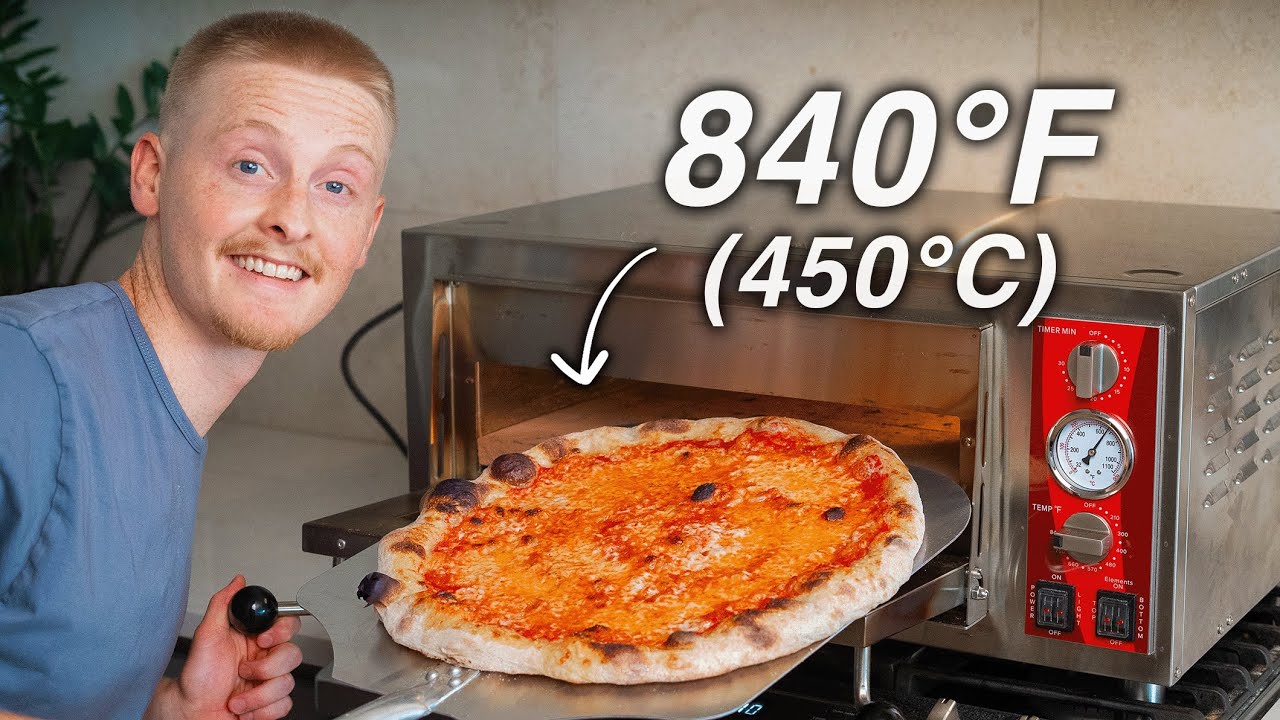
Charlie Anderson strips down the romance around countertop pizza ovens and gets to what actually matters: can you consistently hit 900 degrees and recover heat between pies when you're pushing volume. The answer isn't about the shiniest unit or the biggest marketing budget — it's about thermal mass, airflow, and whether the thing can hold temperature when you're firing six pizzas back-to-back during the dinner rush. You're either building real Neapolitan structure or you're making expensive flatbread.

Equipment Review: Pizza and Baking Stones and Steels
America's Test Kitchen putting pizza stones and steels through their paces, chasing that elusive pizzeria crust most home setups will never touch. You know the difference — that snap when you bite through properly developed dough, the way real heat transforms flour and water into something that actually matters. They're testing thermal mass and heat transfer like it's science, which it is, but any pizza cook who's worked a deck oven already knows steel conducts faster than stone. The gap between your home oven's 500 degrees and a real deck running 700 is the difference between making pizza and making flatbread with stuff on it.

HOW I FILM EPIC PIZZA B ROLL | Behind the Scenes
You're not running a pizza joint to make TikToks, but Schiffer breaks down the camera work that separates amateur food porn from footage that actually sells your product. Watch this if you're tired of your marketing looking like it was shot through a grease-stained iPhone, and learn how proper B-roll can make even mediocre pizza look like something people will drive across town for.
Learn to sharpen them properly — a sharp cheap knife outperforms a dull expensive one every time. Then cookware: heavy-bottomed pans that distribute heat evenly and can go from stovetop to oven. Then the infrastructure — storage containers, sheet pans, thermometers, scales.
The boring stuff that actually determines whether your kitchen functions. The big-ticket items — ovens, fryers, refrigeration — matter enormously, but they're decisions you make once and live with for years.
Tools and technique go hand in hand. Technique & Skill covers the craft that makes equipment useful. For the financial side of equipment decisions, Cost Control puts every purchase in the context of your margins.