Kitchen Systems & Workflow
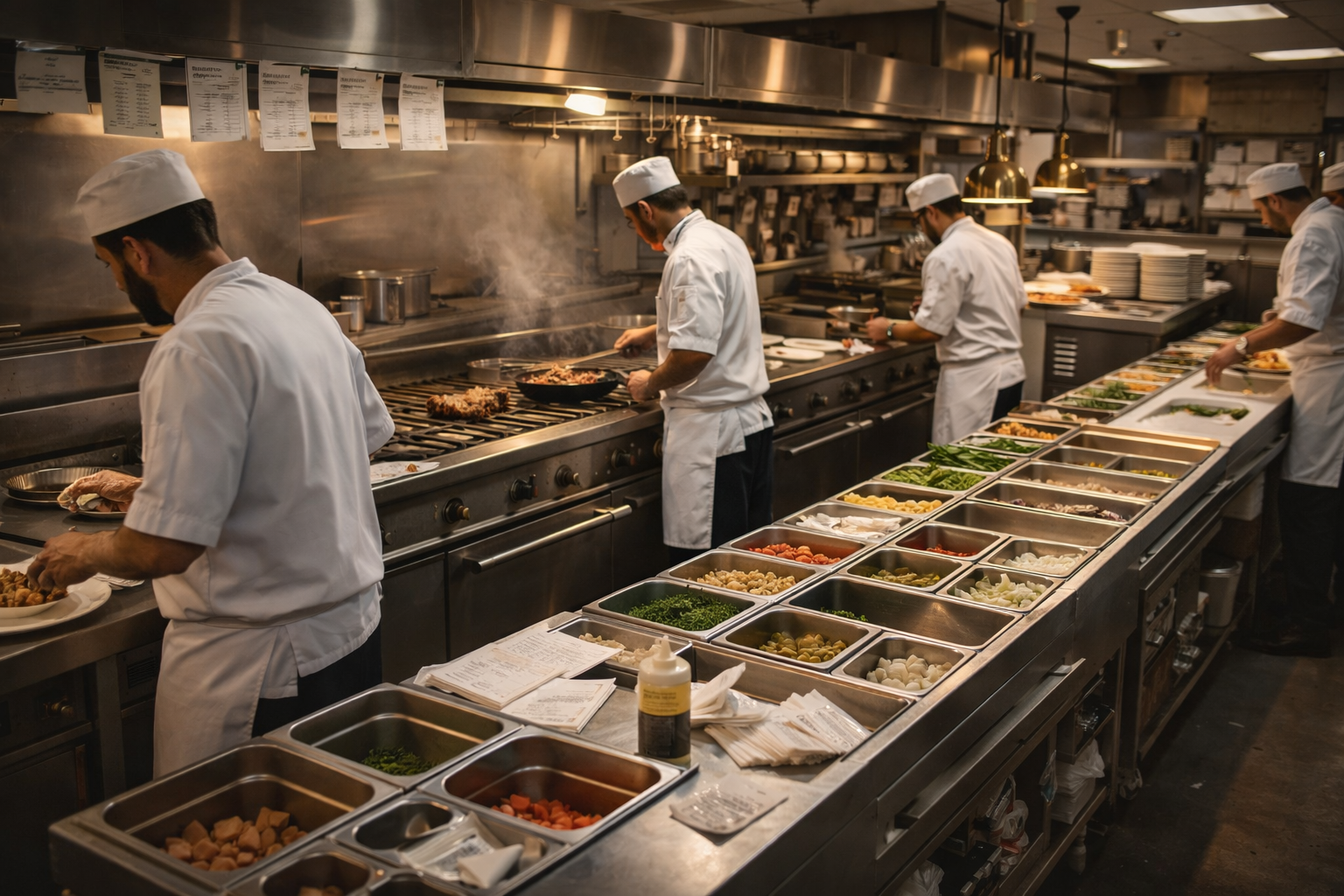
The best kitchen you ever worked in probably wasn't the most talented. It was the most organized. Every station set the same way every night.
Prep lists that told you what to do and in what order. A line check at the same time every day, no exceptions. Systems are what let a kitchen run when the chef isn't standing over it.
They're what make a new hire functional in days instead of weeks. They're the reason one restaurant survives a busy Saturday with two call-outs and another one falls apart. None of it is glamorous.
Prep lists, station maps, handoff protocols, cleaning schedules. But it's the difference between a kitchen that runs and a kitchen that lurches from one crisis to the next.
When the Chef Leaves, the Systems Leave Too
Most kitchens fail at systems the same way. The person who opened the place carries everything in their head — the prep order, the station layouts, the portion weights, the timing. It works because they're there every day.
Then they take a day off. Or they hire a sous chef and step back. Or they open a second location.
And suddenly nobody knows why the soup gets made before the stock, or what the correct portion weight for the salmon is, or how the morning crew is supposed to hand off to the evening crew. The knowledge was never written down because it felt unnecessary when the person who knew everything was always in the building. Writing it down is the work.
A prep list. A station map. A recipe book with actual weights.
It's not complicated, but it takes discipline to build and even more discipline to maintain.
When the Chef Leaves, the Systems Leave Too
Most kitchens fail at systems the same way. The person who opened the place carries everything in their head — the prep order, the station layouts, the portion weights, the timing. It works because they're there every day.
Then they take a day off. Or they hire a sous chef and step back. Or they open a second location.
And suddenly nobody knows why the soup gets made before the stock, or what the correct portion weight for the salmon is, or how the morning crew is supposed to hand off to the evening crew. The knowledge was never written down because it felt unnecessary when the person who knew everything was always in the building. Writing it down is the work.
A prep list. A station map. A recipe book with actual weights.
It's not complicated, but it takes discipline to build and even more discipline to maintain.
“The best kitchen you ever worked in wasn't the most talented. It was the most organized.”
How the Best Kitchens Actually Run
217 videosVideos on mise en place, kitchen organization, service flow, and the systems behind some of the most efficient operations in the world — from ramen shops to airline catering to Michelin-starred restaurants.
4 videos tagged “Pastry & Baking”

Kitchen Tour Of A UK Home Baking Business (5* EHO Rating) - Storage/Organisation/Tips/Advice
She's running a 5-star rated commercial operation out of what looks like a standard home kitchen, and the real lesson isn't in her mixers or her storage bins — it's in how she's made every square inch accountable. You can see the systems thinking: ingredients grouped by function, equipment stored by frequency of use, clear sightlines to everything she needs when an order drops. Anyone who's tried to scale production in tight quarters knows this isn't about having the perfect setup. It's about knowing exactly where your hands go next.

Sourdough Micro Bakery Essentials: 10 Tools I Use Every Day
You're running numbers on a micro bakery and wondering if you can actually make money selling $6 loaves to neighbors who think flour costs fifty cents a pound. Duffy walks through ten tools that separate weekend warriors from operators who can turn 200 pounds of flour into rent money — the bench scraper that saves your wrists, the scale that keeps your margins honest, the proofing setup that doesn't care if your kitchen runs cold. Anyone who's tried to scale artisan anything knows exactly where this gets real.

TOP TIPS for starting a MICRO BAKERY
You're running numbers on a micro bakery because the margins on bread make restaurant food costs look generous, and every extra loaf is pure profit once you hit your break-even. Merlak walks through the math that matters — batch sizing, ingredient costs, and the brutal reality of scaling sourdough when your proving schedule owns your life. Anyone who's tried to turn their side hustle into rent money knows exactly where this gets hard.

How I would learn to cook if I could start over.
Most cooking content teaches you to make a dish. Chlebowski teaches you to think like a cook — taste as you go, understand why salt works, build flavor in layers instead of following recipes like scripture. You've watched line cooks fumble through prep because they learned techniques without learning principles. This is the difference between someone who can execute a recipe and someone who can actually cook when the ticket printer won't stop and you're three ingredients short.
A station map so any cook can set any station without asking. A recipe book with portion weights, plating specs, and production quantities that lives in the kitchen and gets used. Beyond those three: a cleaning schedule that assigns responsibility by name, not assumption.
A handoff protocol between shifts. A line check that happens at the same time every day. None of this requires software.
It requires someone to sit down and write it out, and then enforce it until it becomes culture.
Systems affect everything downstream. The money side lives in Cost Control — poor workflow is usually the root cause of food cost problems. The human side lives in Staff & Leadership — systems only work if people follow them, and people only follow them if they're trained and managed well.