Kitchen Systems & Workflow
The best kitchen you ever worked in probably wasn't the most talented. It was the most organized. Every station set the same way every night.
Prep lists that told you what to do and in what order. A line check at the same time every day, no exceptions. Systems are what let a kitchen run when the chef isn't standing over it.
They're what make a new hire functional in days instead of weeks. They're the reason one restaurant survives a busy Saturday with two call-outs and another one falls apart. None of it is glamorous.
Prep lists, station maps, handoff protocols, cleaning schedules. But it's the difference between a kitchen that runs and a kitchen that lurches from one crisis to the next.
When the Chef Leaves, the Systems Leave Too
Most kitchens fail at systems the same way. The person who opened the place carries everything in their head — the prep order, the station layouts, the portion weights, the timing. It works because they're there every day.
Then they take a day off. Or they hire a sous chef and step back. Or they open a second location.
And suddenly nobody knows why the soup gets made before the stock, or what the correct portion weight for the salmon is, or how the morning crew is supposed to hand off to the evening crew. The knowledge was never written down because it felt unnecessary when the person who knew everything was always in the building. Writing it down is the work.
A prep list. A station map. A recipe book with actual weights.
It's not complicated, but it takes discipline to build and even more discipline to maintain.
When the Chef Leaves, the Systems Leave Too
Most kitchens fail at systems the same way. The person who opened the place carries everything in their head — the prep order, the station layouts, the portion weights, the timing. It works because they're there every day.
Then they take a day off. Or they hire a sous chef and step back. Or they open a second location.
And suddenly nobody knows why the soup gets made before the stock, or what the correct portion weight for the salmon is, or how the morning crew is supposed to hand off to the evening crew. The knowledge was never written down because it felt unnecessary when the person who knew everything was always in the building. Writing it down is the work.
A prep list. A station map. A recipe book with actual weights.
It's not complicated, but it takes discipline to build and even more discipline to maintain.
“The best kitchen you ever worked in wasn't the most talented. It was the most organized.”
How the Best Kitchens Actually Run
217 videosVideos on mise en place, kitchen organization, service flow, and the systems behind some of the most efficient operations in the world — from ramen shops to airline catering to Michelin-starred restaurants.
127 videos tagged “Systems & Ops”

Kitchen Organizing- 7 Amazing Kitchen Organization And Storage Hacks (Kitchen Drawer Organization)
Seven hacks that actually work, from someone who understands that a disorganized drawer costs you thirty seconds every time you reach for that offset spatula — and thirty seconds times two hundred reaches per shift is the difference between getting out at midnight or 12:45. The spring-loaded divider trick alone will save your sanity during the dinner rush when muscle memory needs to find the right tool without looking. You've watched good cooks get buried because their station setup fought them instead of flowing with them.

Restaurant Kitchen Hood Fan Not Working Properly, Repaired!
Your hood fan pulling 14 amps when it should pull 8 isn't just an energy bill problem — it's the difference between your line staying cool during a rush and your cooks wilting by ticket 30. Jeff walks through adjusting the pulley tension like he's done this repair at 2 AM with a dining room full of hangry customers waiting for their orders. Anyone who's watched their kitchen turn into a sweatbox knows exactly why this 6-minute fix is worth memorizing.

Decluttering and Organizing | Kitchen Organization Ideas | Becky Moss
The home kitchen declutter video that accidentally teaches you more about station setup than most culinary school modules. Every knife in its block, every spice labeled and forward-facing, every tool earning its counter space — watch a civilian apply military precision to her mise and recognize the bones of every functional prep station you've ever loved. She's not running service, but she's thinking like someone who might need that whisk in the weeds at 8:47 on a Saturday. The principles scale.

Kitchen Tour Of A UK Home Baking Business (5* EHO Rating) - Storage/Organisation/Tips/Advice
She's running a 5-star rated commercial operation out of what looks like a standard home kitchen, and the real lesson isn't in her mixers or her storage bins — it's in how she's made every square inch accountable. You can see the systems thinking: ingredients grouped by function, equipment stored by frequency of use, clear sightlines to everything she needs when an order drops. Anyone who's tried to scale production in tight quarters knows this isn't about having the perfect setup. It's about knowing exactly where your hands go next.

Cooking on the line, through the eyes of a chef at Restaurant Will Byob in Philadelphia
Twenty-five covers before 7:30 on a Sunday — that's not a rush, that's a controlled burn where every motion counts. Chad Kubanoff shows you what most operators miss: the line isn't about speed, it's about sequence, and the difference between those two things is what separates a kitchen that flows from one that drowns. Watch how he moves between stations without wasted steps, how the tickets get called and answered like a conversation that's been rehearsed for months. This is what 86% food cost and staying open past year two actually looks like.

Restaurant Manager Table Visits
You're either building relationships with your guests or you're just another face taking orders. The Restaurant Boss breaks down table visits like a prep list — timing, approach, what to say when the kitchen's slammed and what to say when it's not. Most managers think showing face is enough, but there's a system here that turns regulars into evangelists and one-timers into repeat covers.

Kitchen Design | Commercial Kitchen Equipment - Part 1
Every piece of equipment you buy becomes a monthly payment you can't 86. Lichter walks through the numbers that separate operators who last from operators who fold — the difference between a $12K combo oven that pays for itself and a $15K showpiece that bleeds you dry. You've seen kitchens designed by people who've never worked a line, all flow and no function. This is the opposite conversation.

Organize your Restaurant | Food Storage | Commercial Kitchen
Your walk-in tells the story of your operation better than any P&L — expired product rotting behind the good stuff, unlabeled containers breeding mystery proteins, shelving that turns mise retrieval into a scavenger hunt. Metro and Carlisle reps walk through the fundamentals that separate kitchens that survive rush from kitchens that drown in it. You're either organizing your storage or your storage is organizing your food costs into the red.

A Commercial Container Kitchen ready for business!
You're looking at 320 square feet of steel that could be slinging burgers by next month while your competitor is still waiting on permits for their brick-and-mortar buildout. The numbers work when you can't afford six figures in kitchen construction but need professional output — these containers hit health department standards and let you test markets without signing your life away on a lease. Every piece of equipment has its place because there's nowhere to hide inefficiency when your entire operation fits in a shipping box.
10 Easy DIY Kitchen Organization Ideas to Maximize Your Space
Home kitchen organization tips that actually translate: vertical storage maximizes prep space, labeled containers prevent the 6 PM scramble for mise, and designated zones keep your flow clean when you're cooking for twelve instead of two. You either control your space or your space controls your service. The fundamentals don't change whether you're running a 200-cover Saturday or feeding the family — everything needs a place, and everything better be in it.
6 Things Every Good Project Manager Does
Six covers fire at once, your grill cook calls out, and somehow the salad station is backed up — you're not just cooking anymore, you're running a project with twenty moving parts and a fifteen-minute deadline. Schroeder breaks down the fundamentals that separate managers who drown from those who keep the machine running: clear communication, realistic timelines, and the kind of systematic thinking that keeps tickets moving when everything else falls apart. Every good chef is already doing this work, but most never learned to name it.
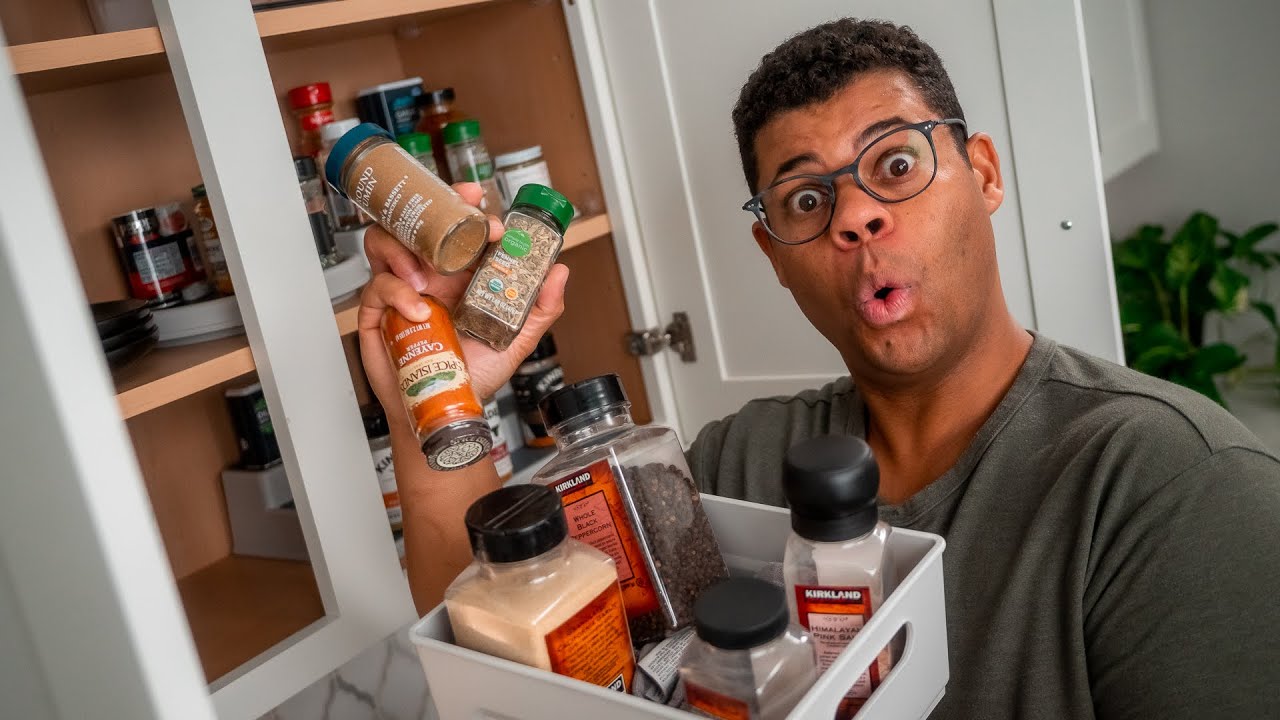
Genius hacks for organizing your spice cabinet
Your spice game separates amateurs from operators — when you're hitting your marks on a busy line, you don't have time to hunt through sixteen different containers of paprika to find the one that isn't empty. These hacks translate directly to mise discipline: label everything, date everything, and build systems that work when you're three tickets deep and the rail is backing up. You're either organized or you're in the weeds.

EASY KITCHEN ORGANIZATION IDEAS 2020! CLEAN AND ORGANIZE WITH ME | Alexandra Beuter
Organization isn't about pretty containers and matching labels — it's about knowing exactly where your mise lives when the tickets start rolling in at 7:30 and you're already three deep. This home cook breaks down the fundamentals that translate directly to your station setup: designated zones, consistent placement, and systems that work when your hands are greasy and the rail is full. You're either organized or you're drowning.

How to setup a Commercial Kitchen - Rental Vancouver
You can drop $200K on buildout and still have a kitchen that fights you every service if the flow is wrong. This setup walkthrough from a Vancouver rental company strips away the Instagram polish to show you what actually matters: the triangle between prep, cook line, and pass that determines whether you're printing money or bleeding it. Watch how they position the dish pit — not where it looks good, but where it keeps your runners from crossing the line during a push.
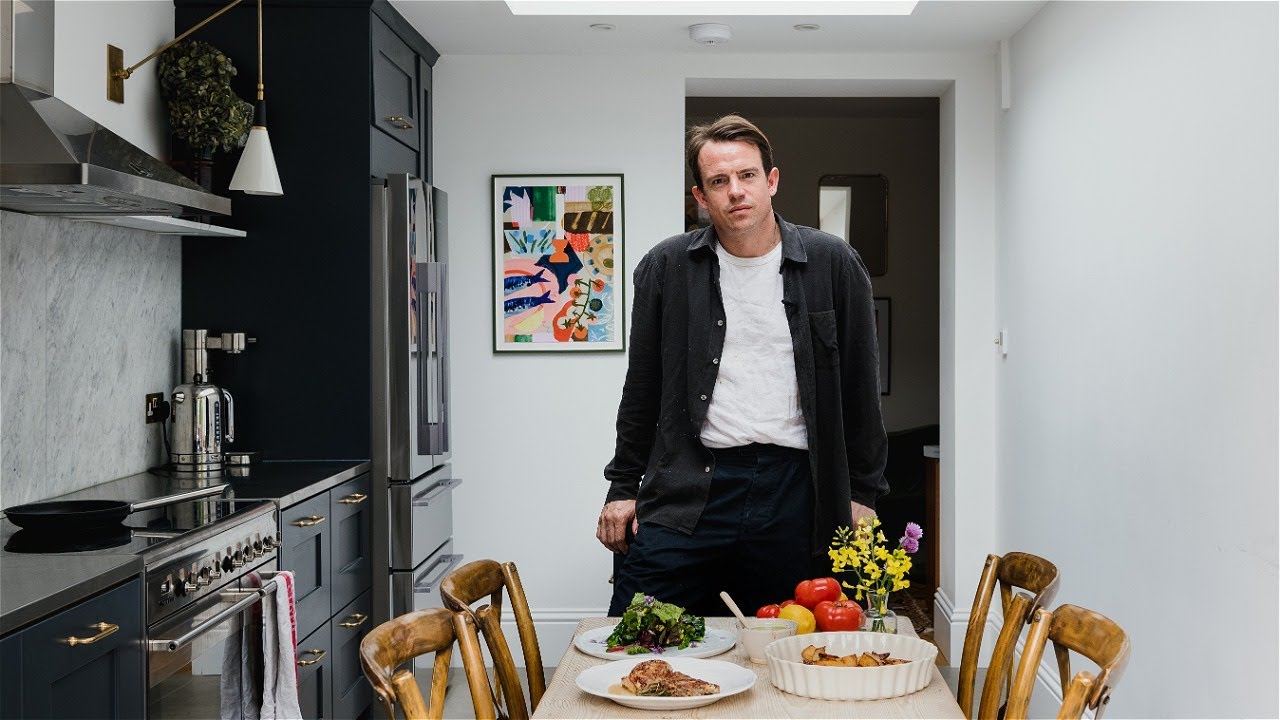
Inside a Pro-Chef's Tiny Kitchen
You think square footage determines efficiency until you watch a pro work a 40-square-foot galley like it's the pass at Le Bernardin. Every tool has a home, every movement eliminates two others, and the mise setup could teach most line cooks a thing or two about intentional placement. The lesson isn't about cooking in small spaces — it's about designing workflow so tight that waste becomes impossible.

Disaster Strikes When Gordon Puts Restaurant Owner In Charge | Kitchen Nightmares
You put an owner on the line during service and watch twenty years of P&L spreadsheets collide with the reality of a Saturday night rail. Gordon's little experiment here isn't television drama — it's proof that knowing food costs and knowing how to fire six steaks to temp are completely different skill sets. Every operator thinks they can jump on the line until the tickets start backing up and muscle memory trumps management theory. The kitchen doesn't care about your equity position when you're three orders behind and the dining room is getting restless.

Top Restaurant Tips That Will Make You A Better Home Cook
These Fallow guys are breaking down the gap between home cooking chaos and line discipline — mise en place, timing, temperature control, the fundamentals that separate someone who cooks from someone who can actually execute. You watch enough home cooks flail through a dinner party and you realize most people are basically running a kitchen with no systems, no prep lists, no understanding that cooking is logistics wearing an apron. They're teaching restaurant mechanics without the restaurant markup.

Is This America's Best New Restaurant? | On The Line | Bon Appétit
Stone runs a 40-seat fine dining operation where every plate tells a story, but watch how he manages the rail during service — each ticket gets called, fired, and plated with the kind of precision that keeps food costs under 30% and servers from dying in the weeds. You can taste the technique in every sauce reduction, but the real lesson is in how he builds systems that let creativity survive the dinner rush. This is what it looks like when someone understands that great food starts with great ops.

Las Vegas’ Most Iconic 24-hour Restaurant is on a Casino Floor | On The Line | Bon Appétit
Eighteen seats, middle of a casino floor, open 24 hours with gamblers breathing down your neck and slot machines drowning out ticket calls — the Oyster Bar shouldn't work. But they've been shucking since 1975 because they figured out the one thing most operations miss: when you can't control the chaos around you, you build systems so tight they run themselves. Six feet from blackjack tables means every move has to be deliberate, every mise spot has to be perfect, because there's nowhere to hide when you're cooking in a fishbowl. The real lesson isn't about oysters — it's about executing flawlessly when the whole world is watching.

This Restaurant is Bringing Ancient Italian Cooking to LA | On The Line | Bon Appétit
Rojas runs Antico Nuovo like he's protecting something sacred — every pasta pulled at exactly the right second, every sauce held at temperature that would make nonna weep. You can't fake this kind of precision when you're pushing 200 covers on a Saturday night with techniques that predate your great-grandfather. The real lesson isn't the ancient methods, it's watching a chef de cuisine maintain museum-quality standards while the printer never stops spitting tickets.

20 Chefs Answer: The Best Shoes for 12 Hour Shifts | Restaurant Talks | Bon Appétit
Twenty chefs, twenty different answers about what goes on their feet during a double — and every single one of them is thinking about the same thing: making it through service without their body giving out. You can tell who's been standing on concrete for fifteen years by how they talk about arch support, and who's still young enough to think style matters when you're pulling prep at 5 AM. The real lesson isn't which brand wins, it's that your feet are equipment, and broken equipment kills covers.

A Day at NYC’s Most Exciting Mexican Restaurant | On The Line | Bon Appétit
Yara Herrera runs Hellbender like someone who's actually had to make payroll — every station dialed in, every movement earning its keep, zero tolerance for the kind of beautiful chaos that looks good on camera but kills your food cost. You watch her work the line and it's clear: this isn't performance, it's a system built by someone who knows exactly what breaks first when you're in the weeds. The kind of operator who can tell you her prime cost down to the decimal while never losing the soul of what makes people cross town for her food.
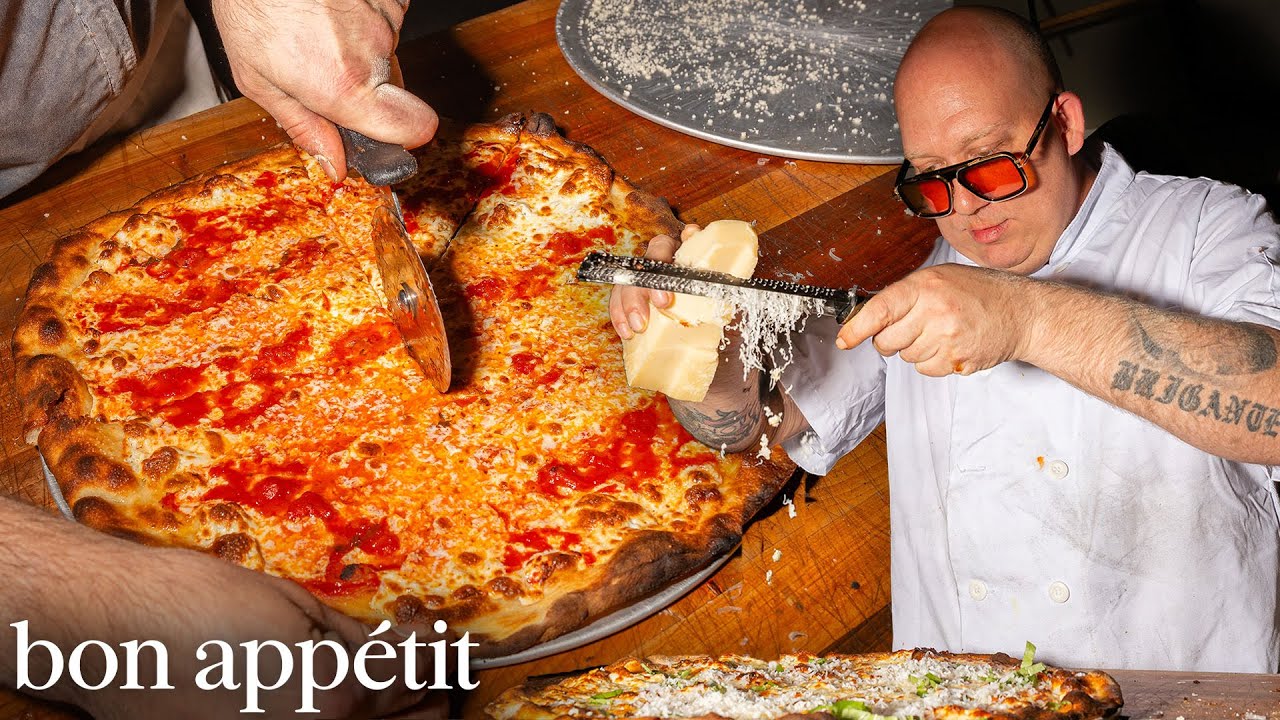
Brooklyn’s Most Eccentric Pizza Maker Has a New Restaurant | On The Line | Bon Appétit
World champion pizza maker running his own spot — you know this is either going to be a masterclass in systems or a beautiful disaster. Nino Coniglio built Lucky Charlie around the kind of obsessive precision that wins competitions, but watch how he adapts those techniques for actual service volume. The difference between making one perfect pie and cranking out 200 covers is everything that matters in this business.

You're Organizing Your Kitchen Wrong!
Most kitchens are designed like someone threw darts at a blueprint — walk-in tucked behind prep, reach-in blocking the pass, dish pit positioned where servers collide with cooks carrying full sheet pans. Mark Tobin breaks down the flow patterns that separate a 200-cover night from a disaster, mapping sight lines and step counts like they actually matter. You're either designing for the rush or the rush is designing your evening for you. Watch a guy who's clearly spent time in the weeds explain why that extra four feet between stations isn't wasted space — it's survival.
A station map so any cook can set any station without asking. A recipe book with portion weights, plating specs, and production quantities that lives in the kitchen and gets used. Beyond those three: a cleaning schedule that assigns responsibility by name, not assumption.
A handoff protocol between shifts. A line check that happens at the same time every day. None of this requires software.
It requires someone to sit down and write it out, and then enforce it until it becomes culture.
Systems affect everything downstream. The money side lives in Cost Control — poor workflow is usually the root cause of food cost problems. The human side lives in Staff & Leadership — systems only work if people follow them, and people only follow them if they're trained and managed well.