
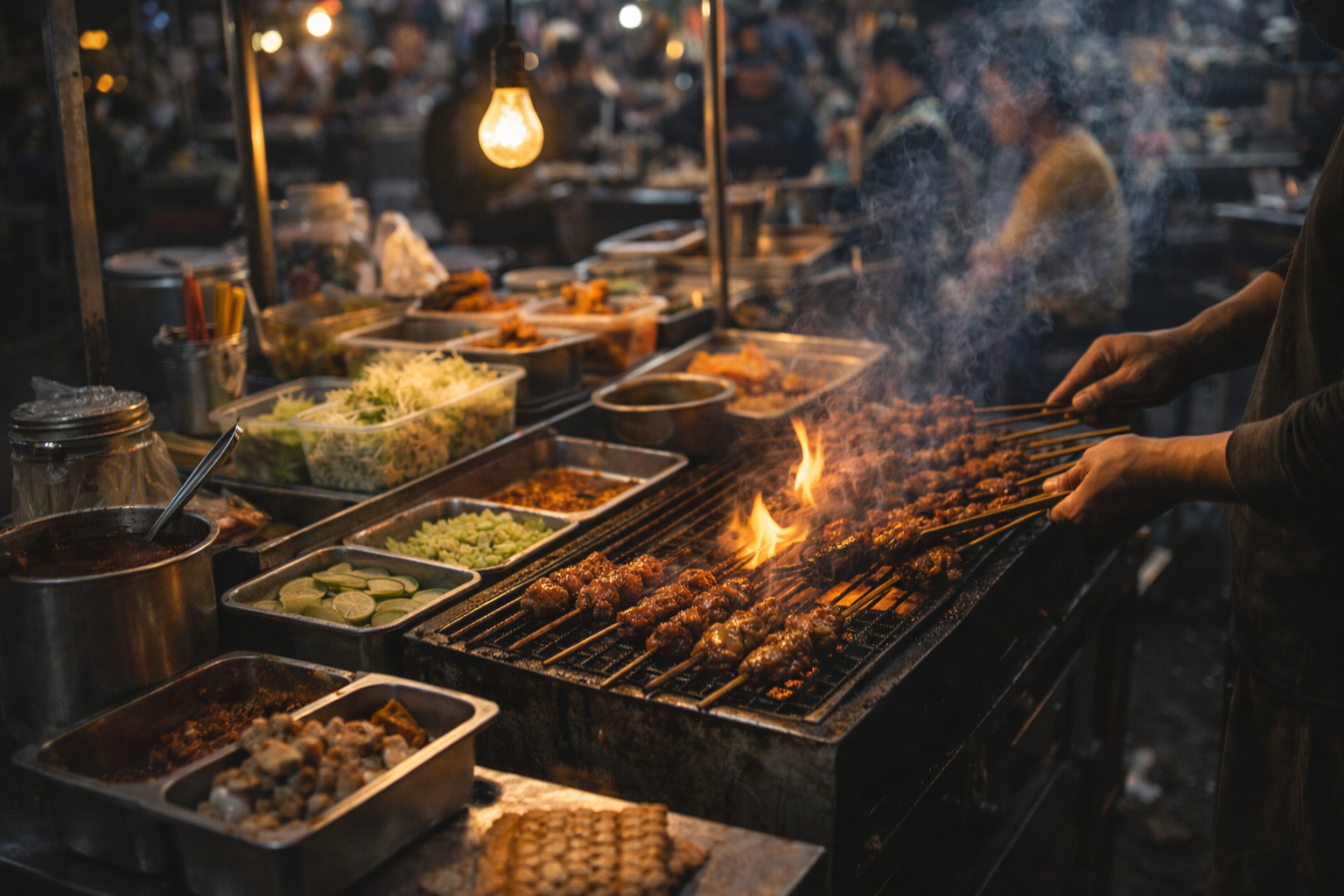
Street Food & Travel
There is a kind of cooking that exists outside restaurants, outside technique manuals, outside the whole apparatus of Michelin stars and tasting menus. It happens on sidewalks and in markets and from carts where a family has been making the same dish for three generations. The food isn't refined, usually.
It isn't trying to be. It's cooking at its most direct — someone learned to make something, they make it extraordinarily well, and they sell it to people who want it. This is where most of the world's most interesting food actually lives.
The dishes that became the foundation of entire cuisines. The flavors that fine dining spends decades trying to deconstruct and never quite captures, because the original was never about refinement — it was about feeding people deliciously with what was available.
What Street Food Remembers That Restaurants Forget
Constraint produces creativity. Every great street food tradition was built under constraints — limited equipment, limited ingredients, limited space, immediate feedback from every customer. The taco al pastor exists because of a vertical spit brought by Lebanese immigrants to Mexico and adapted with local chiles and pineapple.
The bánh mì exists because of French baguettes grafted onto Vietnamese flavors and economics. A vendor with one dish has to make that dish extraordinary. A restaurant with forty items often makes none of them extraordinary.
There's a lesson in that for anyone designing a menu or thinking about what their kitchen is actually for. Simplicity isn't a limitation. It's focus.
What Street Food Remembers That Restaurants Forget
Constraint produces creativity. Every great street food tradition was built under constraints — limited equipment, limited ingredients, limited space, immediate feedback from every customer. The taco al pastor exists because of a vertical spit brought by Lebanese immigrants to Mexico and adapted with local chiles and pineapple.
The bánh mì exists because of French baguettes grafted onto Vietnamese flavors and economics. A vendor with one dish has to make that dish extraordinary. A restaurant with forty items often makes none of them extraordinary.
There's a lesson in that for anyone designing a menu or thinking about what their kitchen is actually for. Simplicity isn't a limitation. It's focus.
“Constraint produces creativity. Simplicity isn't a limitation. It's focus.”
The Food That Feeds Everything Else
378 videosVideos on street food vendors, night markets, food destinations, artisan food production, and the culinary traditions that fine dining borrows from constantly.
8 videos tagged “American”

Chicago Deep Dish Pizza & Foie Gras Hot Dogs | Anthony Bourdain: No Reservations | Travel Channel
Chicago doesn't apologize for its food — deep dish pizza and foie gras hot dogs exist because this city decided restraint was for other places. Bourdain eating through the Second City's greatest hits, where excess is the point and subtlety can wait.

Mud Bath and an Icelandic Hot Dog | Anthony Bourdain: No Reservations | Travel Channel
Iceland teaches you that sometimes the best meal is the simplest one — a hot dog from a stand that's been doing the same thing for decades while the rest of the world chases complexity. Bourdain soaking in geothermal mud before eating a pylsur with crispy onions is the kind of travel eating that reminds you why street food exists: not for Instagram, but because people need to eat well and fast.

Eating Kansas City BBQ with The Black Keys | Anthony Bourdain: No Reservations | Travel Channel
Kansas City BBQ with The Black Keys — because the best meals happen when the music is right and nobody's trying to elevate anything. Burnt ends, white bread, cheap beer, and musicians who understand that simplicity is the hardest thing to get right, whether you're playing guitar or smoking brisket.

PINOY Street Food GIANT CALAMARES, Fried Chicken HEAD, SpicyDinamite, CheeseStik | TOTOBITS Pampanga
Worth watching for anyone in the kitchen game. Ewic Mukbang brings real perspective here.
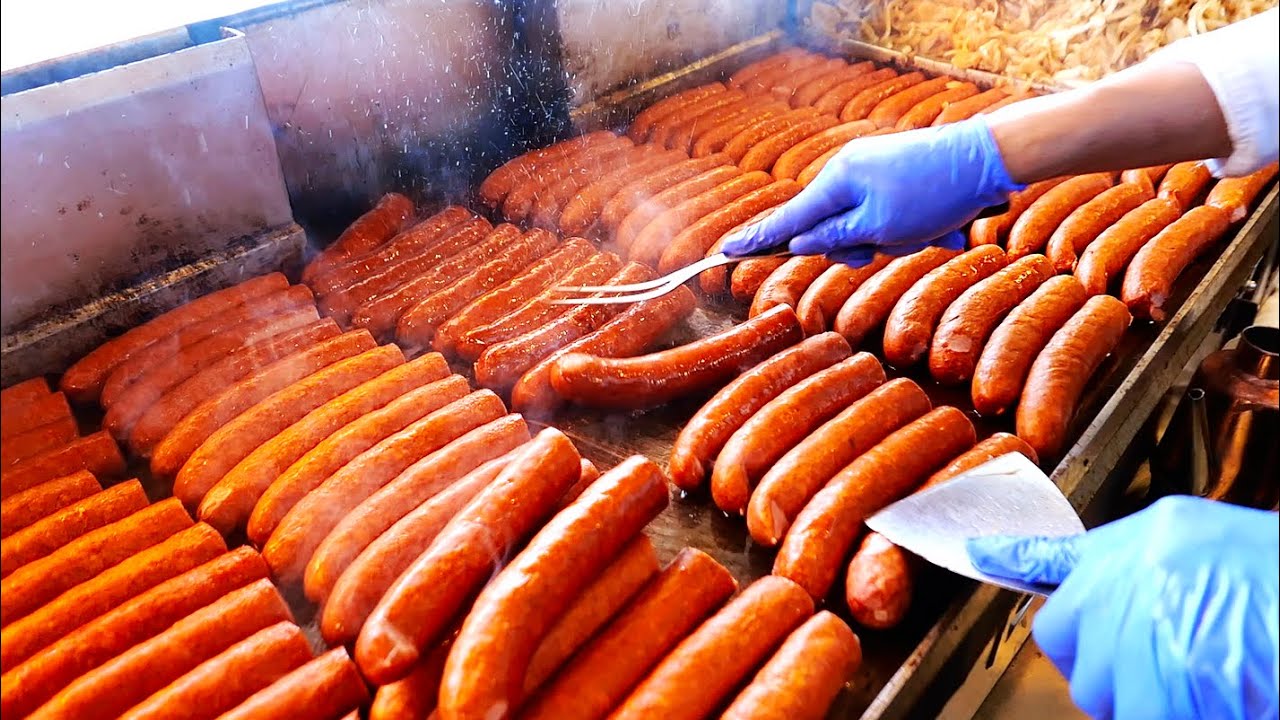
American Street Food - The BEST HOT DOGS in Chicago! Jim’s Original Sausages, Burgers, Pork Chops
Jim's Polish has been slinging the same Maxwell Street-style dogs since 1939, grease-stained and unapologetic in a world of artisanal everything. You watch these guys work the flattop with the kind of muscle memory that only comes from doing the same motions ten thousand times — onions caramelizing, casings snapping, buns getting that perfect toast on the edges. This isn't about innovation or Instagram, it's about showing up every day and feeding people who work with their hands. The line tells you everything you need to know.
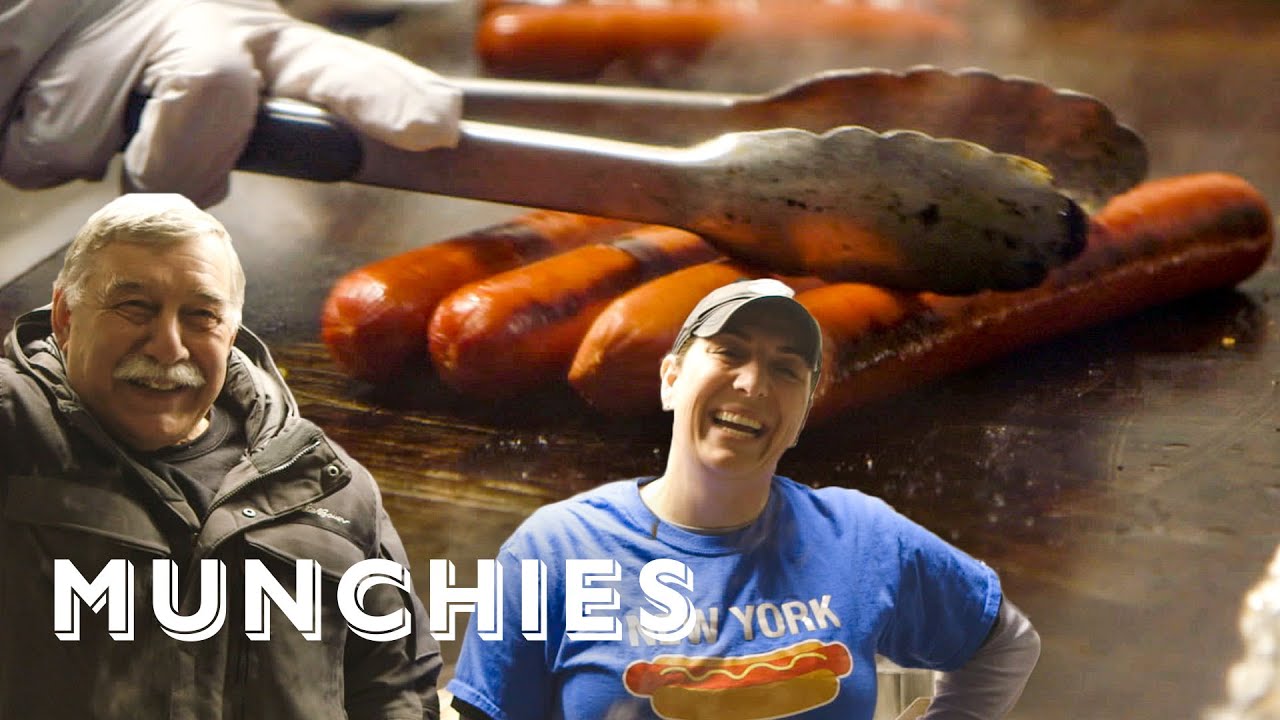
One of NYC's Last Independent Hot Dog Vendors
Danny and Elizabeth Rossi work the same corner outside the Met that Danny's been manning for decades, slinging dogs from a cart that's probably older than half the line cooks reading this. While food trucks chase Instagram and pop-ups burn venture capital, these two show up every day with mustard, kraut, and the kind of consistency that built New York's food scene before anyone cared about "authenticity." You want to understand what independent really means? It's a father teaching his daughter that the work itself is the point.
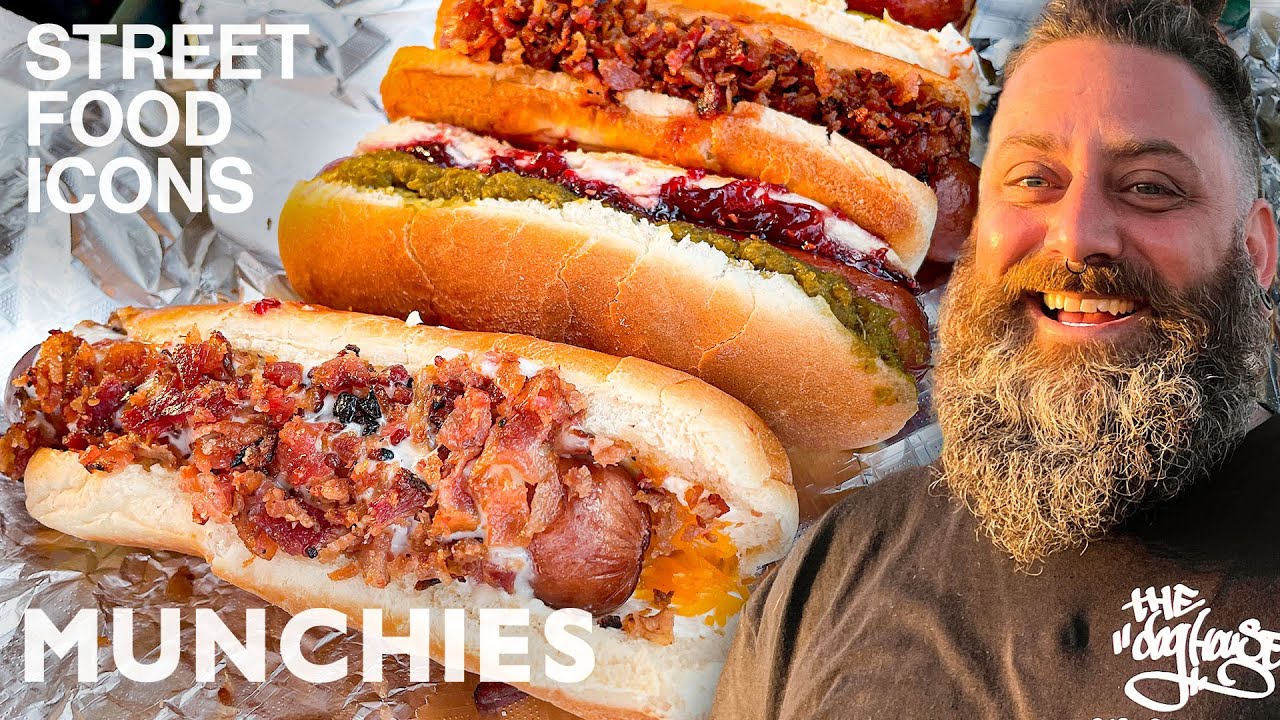
The Hot Dog King of Tulsa | Street Food Icons
Josh Lynch took a $3,000 food truck and turned it into Tulsa's hot dog destination — not through Instagram wizardry or viral stunts, but by showing up every day and perfecting one thing until people couldn't ignore it. You've seen a thousand food truck dreams crash on the rocks of bad location and weak execution. This guy figured out that being the hot dog king of one city beats being nobody everywhere else.

$2 Burgers in Harlem | Street Food Icons
I've eaten at joints like Mo's across this country, and the ones that survive decades in neighborhoods like Harlem aren't there by accident — they're feeding people real food at prices that matter. Mo Robinson Jr. understands something most restaurant owners never will: consistency and respect for your community beats Instagram-worthy bullshit every single time. This is what actual hospitality looks like when the cameras aren't rolling.
The dosa cart in Manhattan. The Oaxacan tlayuda in Los Angeles. Every one of these is a story of someone bringing what they knew to a new place and adapting it to survive.
The food is inseparable from the story, and the story is usually more interesting than anything happening in a restaurant with a PR team.
The creativity and constraint in these videos connects directly to Menu Design — the best menus are often inspired by exactly this kind of focused simplicity. Underdogs & Origins tells similar stories from a more personal angle.