
Street Food & Travel
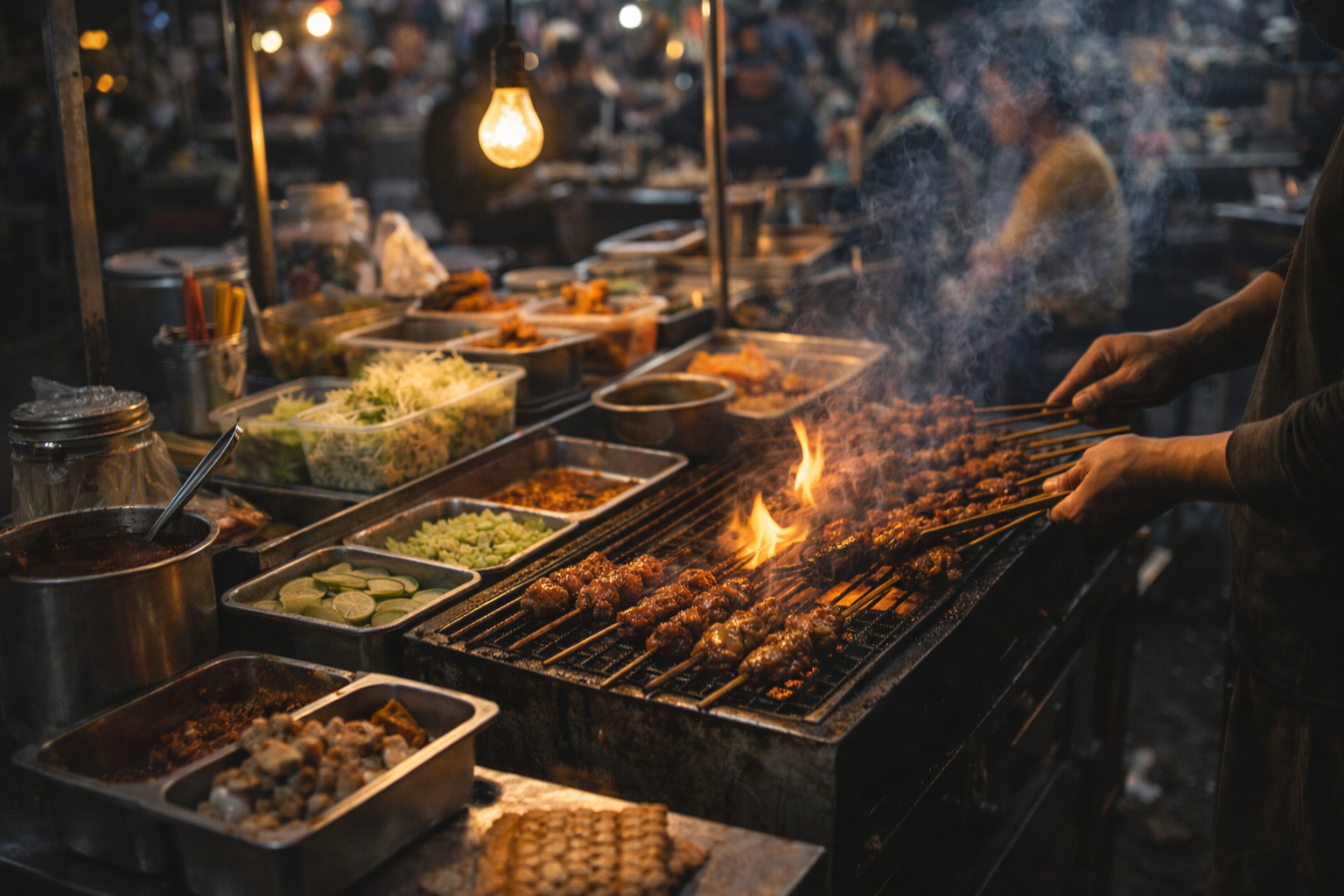
There is a kind of cooking that exists outside restaurants, outside technique manuals, outside the whole apparatus of Michelin stars and tasting menus. It happens on sidewalks and in markets and from carts where a family has been making the same dish for three generations. The food isn't refined, usually.
It isn't trying to be. It's cooking at its most direct — someone learned to make something, they make it extraordinarily well, and they sell it to people who want it. This is where most of the world's most interesting food actually lives.
The dishes that became the foundation of entire cuisines. The flavors that fine dining spends decades trying to deconstruct and never quite captures, because the original was never about refinement — it was about feeding people deliciously with what was available.
What Street Food Remembers That Restaurants Forget
Constraint produces creativity. Every great street food tradition was built under constraints — limited equipment, limited ingredients, limited space, immediate feedback from every customer. The taco al pastor exists because of a vertical spit brought by Lebanese immigrants to Mexico and adapted with local chiles and pineapple.
The bánh mì exists because of French baguettes grafted onto Vietnamese flavors and economics. A vendor with one dish has to make that dish extraordinary. A restaurant with forty items often makes none of them extraordinary.
There's a lesson in that for anyone designing a menu or thinking about what their kitchen is actually for. Simplicity isn't a limitation. It's focus.
What Street Food Remembers That Restaurants Forget
Constraint produces creativity. Every great street food tradition was built under constraints — limited equipment, limited ingredients, limited space, immediate feedback from every customer. The taco al pastor exists because of a vertical spit brought by Lebanese immigrants to Mexico and adapted with local chiles and pineapple.
The bánh mì exists because of French baguettes grafted onto Vietnamese flavors and economics. A vendor with one dish has to make that dish extraordinary. A restaurant with forty items often makes none of them extraordinary.
There's a lesson in that for anyone designing a menu or thinking about what their kitchen is actually for. Simplicity isn't a limitation. It's focus.
“Constraint produces creativity. Simplicity isn't a limitation. It's focus.”
The Food That Feeds Everything Else
378 videosVideos on street food vendors, night markets, food destinations, artisan food production, and the culinary traditions that fine dining borrows from constantly.
5 videos tagged “Japanese”

Anthony Soars Over São Paulo | Anthony Bourdain: No Reservations | Travel Channel
Sao Paulo from above — a concrete jungle that hides the most diverse food scene in South America. Japanese, Italian, Lebanese, African, and Brazilian cooking all colliding in a city of twenty million that eats like its life depends on it, because it does.

Tamales, Tacos, & Sushi in San Francisco | Anthony Bourdain: No Reservations | Travel Channel
San Francisco's food identity crisis is actually its greatest strength — tamales, tacos, and sushi coexisting in a city where nobody agrees on anything except that the food should be good. Bourdain eating through the fog, finding truth in a burrito at 3 AM.

I Ate Every Japanese Fast Food
Watching someone methodically work through an entire country's fast food landscape isn't just entertainment — it's competitive intelligence disguised as content. Every chain Nick hits represents menu engineering decisions that moved millions of customers, speed-of-service solutions your kitchen could steal, and flavor profiles that Americans haven't seen coming yet.

Day in the Life of a Japanese Ramen Chef
I've watched enough ramen joints in Tokyo to know this isn't some Instagram fantasy—it's the brutal, beautiful reality of standing over boiling broth for 12 hours straight, where every bowl carries the weight of tradition and rent money. Paolo gets past the usual "hardworking Japanese" clichés to show you what it actually takes to make something real in a city that eats bullshit for breakfast.
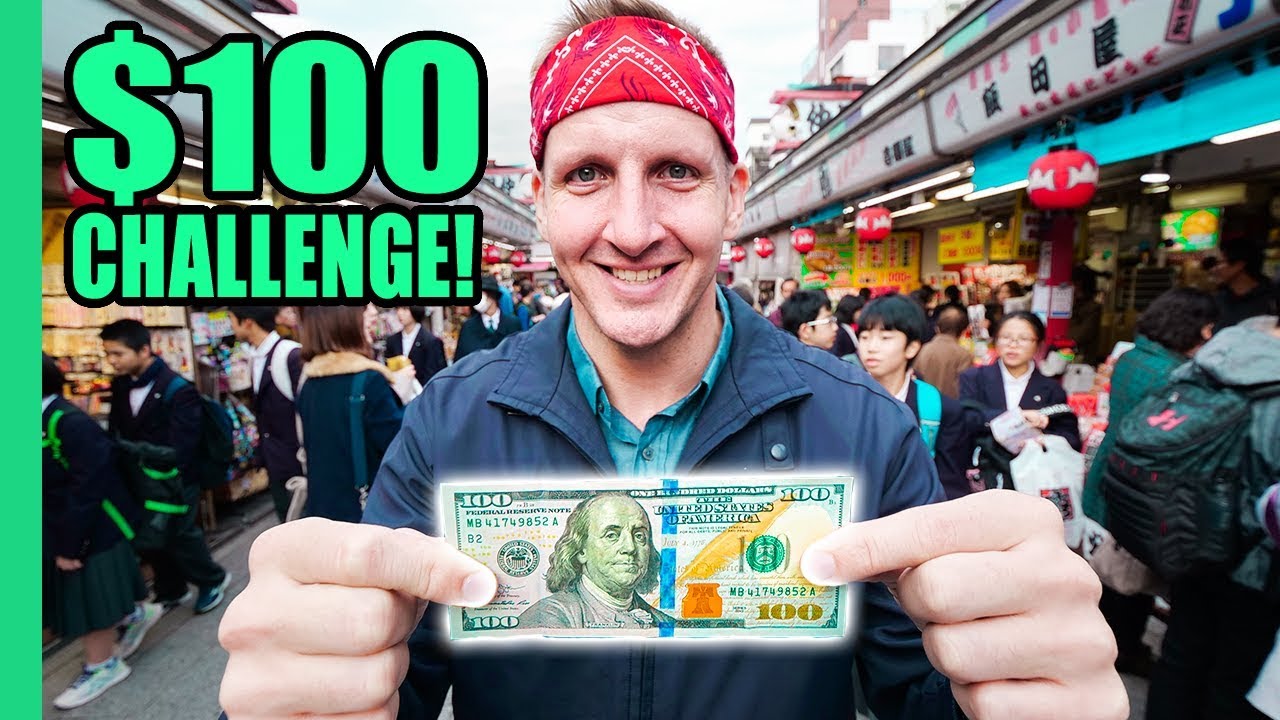
JAPAN Street Food $100 CHALLENGE in Asakusa, Tokyo! The best Japanese Street Food in Tokyo!
Look, I've eaten my way through every Tokyo market worth a damn, and Asakusa still delivers the kind of authentic street-side chaos that makes your heart race and your wallet weep. Sonny knows how to navigate these stalls without the tourist bullshit — he's hunting for the real vendors, the ones who've been slinging the same perfect yakitori or taiyaki for decades. This is what street food hunting should look like: messy, immediate, and completely fucking honest about what a hundred bucks can buy you in one of the world's greatest food cities.
The dosa cart in Manhattan. The Oaxacan tlayuda in Los Angeles. Every one of these is a story of someone bringing what they knew to a new place and adapting it to survive.
The food is inseparable from the story, and the story is usually more interesting than anything happening in a restaurant with a PR team.
The creativity and constraint in these videos connects directly to Menu Design — the best menus are often inspired by exactly this kind of focused simplicity. Underdogs & Origins tells similar stories from a more personal angle.