Technique & Skill
There are two kinds of cooking knowledge. There's the kind you can read — ratios, temperatures, the science of emulsification. And there's the kind that lives in your hands.
The feel of properly developed dough. The sound of a correct sear. The instinct for when a sauce is thirty seconds from breaking.
The second kind only comes from repetition, and it's what separates cooks who are capable from cooks who are good. These videos are worth watching more than once. A great demonstration of knife work isn't educational the first time — it's educational the twentieth time, when you've done the cut yourself a hundred times and can finally see the specific thing you're still getting wrong.
Why Watching Isn't the Same as Learning
A skilled cook makes everything look easy, and that's the trap. The knife glides through the onion because a thousand hours of practice found the exact grip, angle, and motion that eliminates resistance. The sauce comes together in seconds because the cook knows instinctively when the temperature is right and how much fat to add.
None of it was natural. All of it was built through deliberate practice, usually with someone standing next to them correcting their wrist angle or their pan technique. Video can't correct your wrist.
But it can show you what correct looks like, clearly and repeatedly, so that when you practice, you know what you're aiming for. Watch carefully. Practice slowly.
Watch again and find what you missed.
Why Watching Isn't the Same as Learning
A skilled cook makes everything look easy, and that's the trap. The knife glides through the onion because a thousand hours of practice found the exact grip, angle, and motion that eliminates resistance. The sauce comes together in seconds because the cook knows instinctively when the temperature is right and how much fat to add.
None of it was natural. All of it was built through deliberate practice, usually with someone standing next to them correcting their wrist angle or their pan technique. Video can't correct your wrist.
But it can show you what correct looks like, clearly and repeatedly, so that when you practice, you know what you're aiming for. Watch carefully. Practice slowly.
Watch again and find what you missed.
“A great demonstration isn't educational the first time. It's educational the twentieth.”
The Foundations Worth Practicing
427 videosVideos on knife skills, cooking fundamentals, plating techniques, and the craft behind professional cooking at every level.
5 videos tagged “America's Test Kitchen”
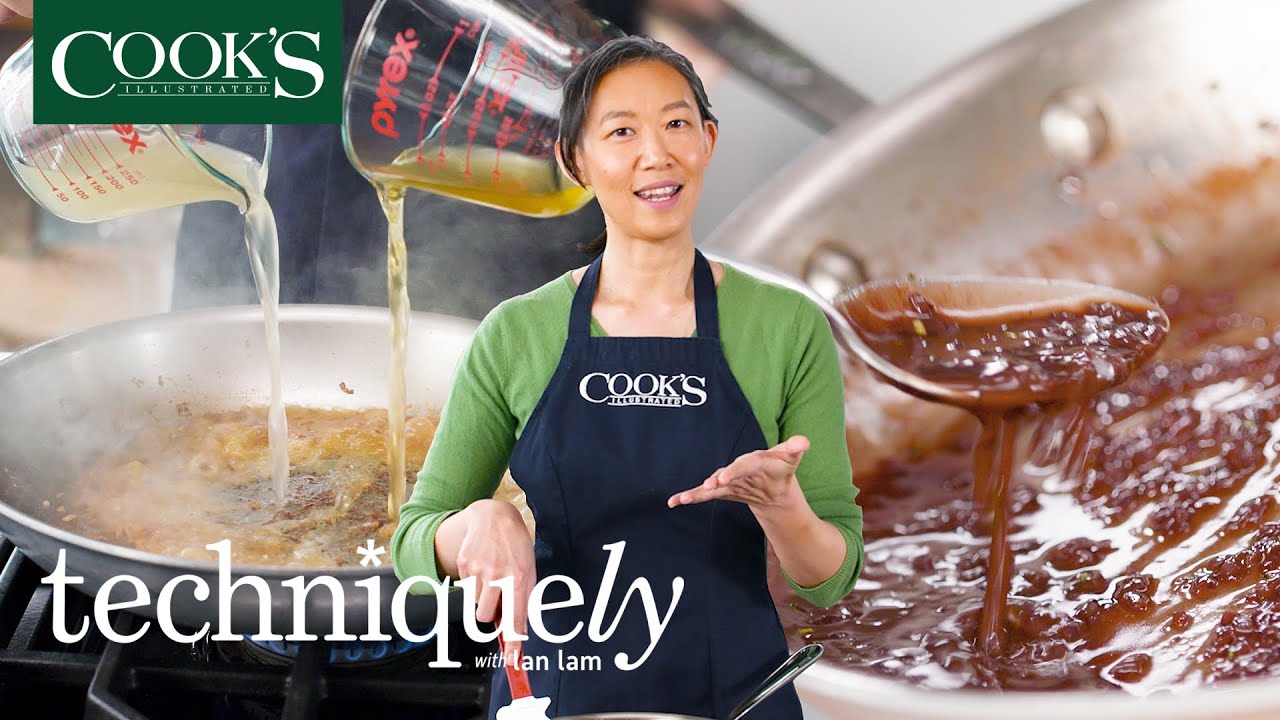
The Secrets to Easy & Delicious Pan Sauces | Techniquely with Lan Lam
You can always spot the cooks who never learned proper pan sauce technique — they're the ones deglazing with cold stock or dumping cream into a screaming hot pan. Lan Lam breaks down the fundamentals that separate a glossy, restaurant-quality sauce from the broken, greasy mess most home cooks settle for. The kind of muscle memory that saves your ass when you're plating 200 covers and need that chicken breast to sing.

Chinese Cleaver 101: How to Chop, Slice, and Dice | Hunger Pangs
Kevin Pang and his father Jeffrey break down the Chinese cleaver like it's meant to be broken down — not as some exotic blade for show, but as the workhorse that built half the world's kitchens. You watch Jeffrey's hands move and realize this isn't technique, it's muscle memory carved in over decades of prep shifts where speed meant survival. The cleaver does everything: chops through bone, juliennes scallions paper-thin, smashes garlic to paste with the flat. Anyone still fumbling with six different knives for basic prep should pay attention.

5 Unexpected Ways to Use Salt Every Cook Should Know | What's Eating Dan?
Dan Souza walks through five salt tricks that separate the lifers from the weekend warriors — using it to clean cast iron, stop grease fires, keep cutting boards from sliding. You've probably stumbled into half of these by necessity during a particularly brutal service, but watching him explain the science makes you realize how much kitchen wisdom gets passed down without anyone bothering to explain why it works. The kind of video that makes you text your sous at midnight with "yo, did you know salt actually does this thing we've been doing for years?"

The 3 Knife Skills Everyone Should Know | Techniquely With Lan Lam
Three cuts that separate the cooks who last from those who wash out by week two — the brunoise that actually holds under heat, the chiffonade that doesn't bruise your herbs, and the knife grip that won't send you to urgent care during a rush. Lan Lam breaks down what your knife is supposed to do when you stop fighting it and start listening to it. Anyone who's watched a stage fumble through prep while the clock ticks knows exactly why these fundamentals matter.

How to Make the Absolute Best Baked Potatoes
I've watched a thousand cooks fuck up something as simple as a baked potato, and here's Elle Simone doing the real work to figure out why. America's Test Kitchen strips away the guesswork and gives you the actual science behind getting that perfect fluffy interior and crispy skin every damn time. This is the kind of methodical breakdown that separates professional kitchens from weekend warriors throwing spuds in the oven and hoping for the best.
A cook who can break down a case of onions in ten minutes has twenty more minutes for everything else on the prep list. After the knife: heat management. Reading a pan.
Knowing the difference between a sear and a steam. Understanding what oil temperature actually sounds like. Then plating — not as decoration, but as the final step in communicating what the dish is supposed to be.
Each skill builds on the one before it, and none of them have shortcuts.
Technique and equipment are inseparable — understanding your tools is part of executing properly. Equipment & Tools goes deeper on the gear. For the business context that makes these skills valuable, Cost Control and Menu Design show how craft translates into a menu that works financially.