Technique & Skill
There are two kinds of cooking knowledge. There's the kind you can read — ratios, temperatures, the science of emulsification. And there's the kind that lives in your hands.
The feel of properly developed dough. The sound of a correct sear. The instinct for when a sauce is thirty seconds from breaking.
The second kind only comes from repetition, and it's what separates cooks who are capable from cooks who are good. These videos are worth watching more than once. A great demonstration of knife work isn't educational the first time — it's educational the twentieth time, when you've done the cut yourself a hundred times and can finally see the specific thing you're still getting wrong.
Why Watching Isn't the Same as Learning
A skilled cook makes everything look easy, and that's the trap. The knife glides through the onion because a thousand hours of practice found the exact grip, angle, and motion that eliminates resistance. The sauce comes together in seconds because the cook knows instinctively when the temperature is right and how much fat to add.
None of it was natural. All of it was built through deliberate practice, usually with someone standing next to them correcting their wrist angle or their pan technique. Video can't correct your wrist.
But it can show you what correct looks like, clearly and repeatedly, so that when you practice, you know what you're aiming for. Watch carefully. Practice slowly.
Watch again and find what you missed.
Why Watching Isn't the Same as Learning
A skilled cook makes everything look easy, and that's the trap. The knife glides through the onion because a thousand hours of practice found the exact grip, angle, and motion that eliminates resistance. The sauce comes together in seconds because the cook knows instinctively when the temperature is right and how much fat to add.
None of it was natural. All of it was built through deliberate practice, usually with someone standing next to them correcting their wrist angle or their pan technique. Video can't correct your wrist.
But it can show you what correct looks like, clearly and repeatedly, so that when you practice, you know what you're aiming for. Watch carefully. Practice slowly.
Watch again and find what you missed.
“A great demonstration isn't educational the first time. It's educational the twentieth.”
The Foundations Worth Practicing
427 videosVideos on knife skills, cooking fundamentals, plating techniques, and the craft behind professional cooking at every level.
10 videos tagged “French”

Perfect pistachio soufflé prepared with Pierre Koffmann | Meet Your Maestro | BBC Maestro
A souffle is a promise — rise and fall, glory and collapse, all in the span of a service window. Koffmann's pistachio version adds a layer of nuttiness that deepens the sweetness without masking it. The technique is exacting: fold too hard and it dies, fold too gently and the batter stays raw in the center. Pastry is precision, and this is proof.

Venison with red wine and raspberry sauce - Pierre Koffmann | BBC Maestro
Game meat intimidates home cooks and bores restaurant diners who have seen one too many venison specials. Koffmann splits the difference — a dish sophisticated enough for a tasting menu but explained clearly enough for a Tuesday night. The raspberry in the sauce is the twist that lifts everything, a reminder that the best French cooking has always known when sweetness belongs on a savory plate.

Preparing delicious Gratin Dauphinois with Marco Pierre White | Meet Your Maestro | BBC Maestro
There are two kinds of chefs: those who think gratin dauphinois is easy, and those who have tried to make it properly. White belongs to the second camp — the ratio of cream to potato, the thickness of the slice, the temperature of the oven. Get any one wrong and you have soup. Get them all right and you have the greatest side dish in French cooking.
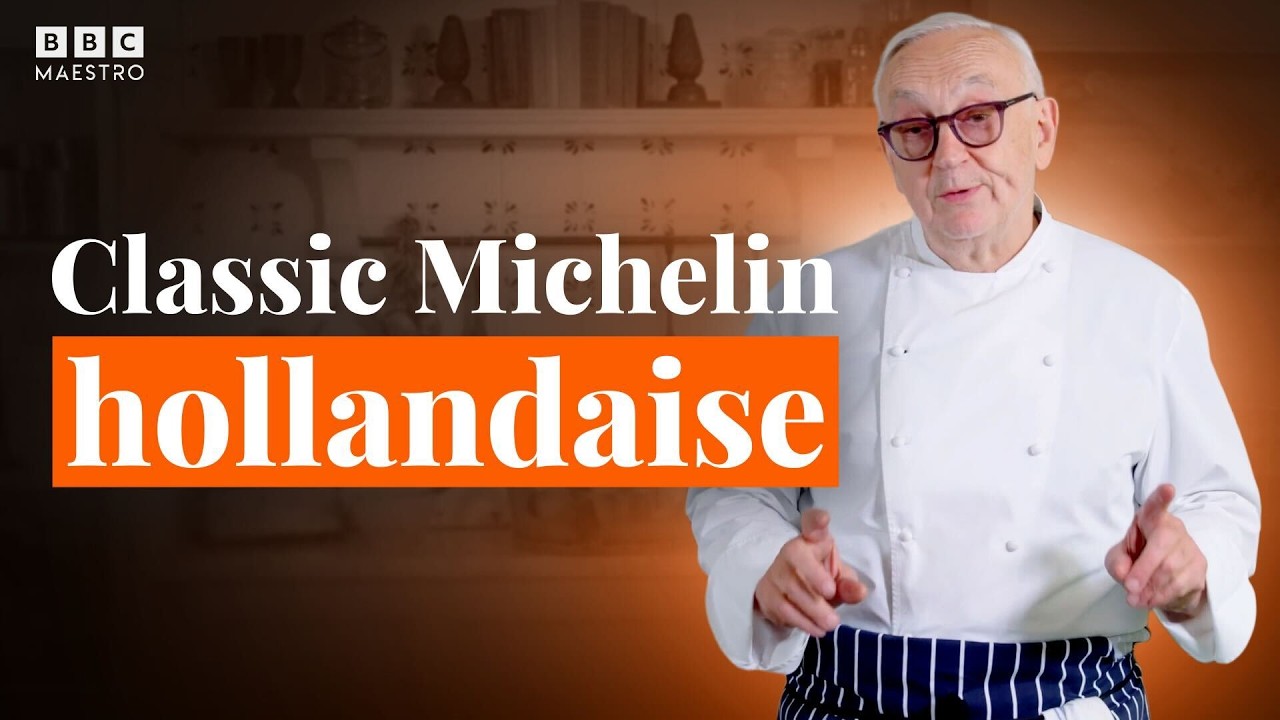
The ONLY hollandaise recipe you’ll ever need with Pierre Koffmann | Meet your Maestro | BBC Maestro
Hollandaise breaks. Every chef knows this. It splits when you look away, when the heat spikes, when the egg yolk decides it has had enough. Koffmann's version is not accident-proof — nothing is — but his technique minimizes every variable. If your brunch hollandaise has been giving you grief, the fix is probably in this twelve-minute window.

Cook the perfect coq au vin with Pierre Koffmann | Meet your Maestro | BBC Maestro
Coq au vin is peasant food that pretends to be nothing else, and Koffmann treats it accordingly — no molecular foam, no tweezered microgreens, just braised chicken in wine done with the certainty of a man who grew up eating it. The recipe is a time machine to the Gascony farmhouse where his grandmother taught him what a stove was for.

The ONLY duck confit recipe you'll ever need with Pierre Koffmann | Meet your Maestro | BBC Maestro
Pierre Koffmann renders duck legs in their own fat like he's conducting an orchestra — every movement deliberate, every timing cue earned through decades on the line. You watch his hands work the salt cure, the way he tests doneness without even thinking about it, and you realize this isn't a recipe you learn from a video. This is muscle memory built over 40 years of service, distilled into four minutes of technique that most cooks will spend years trying to replicate properly.

Jacques Pépin's Maman's Cheese Soufflé | Genius Recipes
Jacques Pépin's mother didn't need to prove anything to anyone — she just needed to feed her family a soufflé that wouldn't collapse if someone sneezed in the next room. While culinary school teaches you seventeen ways to fold egg whites and lecture about proper ramekin preparation, Maman's version strips away the theater and shows you what actually works on a Tuesday night when the stove runs hot and the oven door gets slammed. You either trust the technique or you don't. The soufflé knows the difference.

Fast Cheese Soufflé
Jacques Pépin makes a soufflé look like whisking eggs — no drama, no ceremony, just forty years of muscle memory moving through the steps while he talks about his grandmother's kitchen. You watch his hands work the roux and realize there's nothing fast about this except the confidence that comes from doing something ten thousand times until it becomes automatic. The kind of technique that separates the cooks who've been there from the ones still checking recipes twice.

Fish Ballotine at Home: Ultimate Step-by-Step Recipe
Chef Majk walks you through ballotine like it's supposed to be walked through — methodical knife work, proper seasoning ratios, the kind of clean technique that separates weekend warriors from people who actually plate 200 covers. You can see the muscle memory in every cut, the way his hands know exactly where the fish wants to separate. This isn't flashy Instagram content trying to go viral with shortcuts and hacks. It's just solid French technique, filmed well, for cooks who want to get better at their job.

Cooking Chicken from Beginner to Michelin
Jack from Fallow walks you through three approaches to chicken that map perfectly to where you actually are in your career — the quick sear that gets you through service, the proper French technique that separates cooks from line cooks, and the Michelin approach where every element serves the protein. You can taste the progression in his hands: the confidence that only comes from breaking down ten thousand birds, the muscle memory that turns technique into instinct. This is what separating skill levels actually looks like when someone who knows stops pretending it's all the same.
A cook who can break down a case of onions in ten minutes has twenty more minutes for everything else on the prep list. After the knife: heat management. Reading a pan.
Knowing the difference between a sear and a steam. Understanding what oil temperature actually sounds like. Then plating — not as decoration, but as the final step in communicating what the dish is supposed to be.
Each skill builds on the one before it, and none of them have shortcuts.
Technique and equipment are inseparable — understanding your tools is part of executing properly. Equipment & Tools goes deeper on the gear. For the business context that makes these skills valuable, Cost Control and Menu Design show how craft translates into a menu that works financially.