Technique & Skill
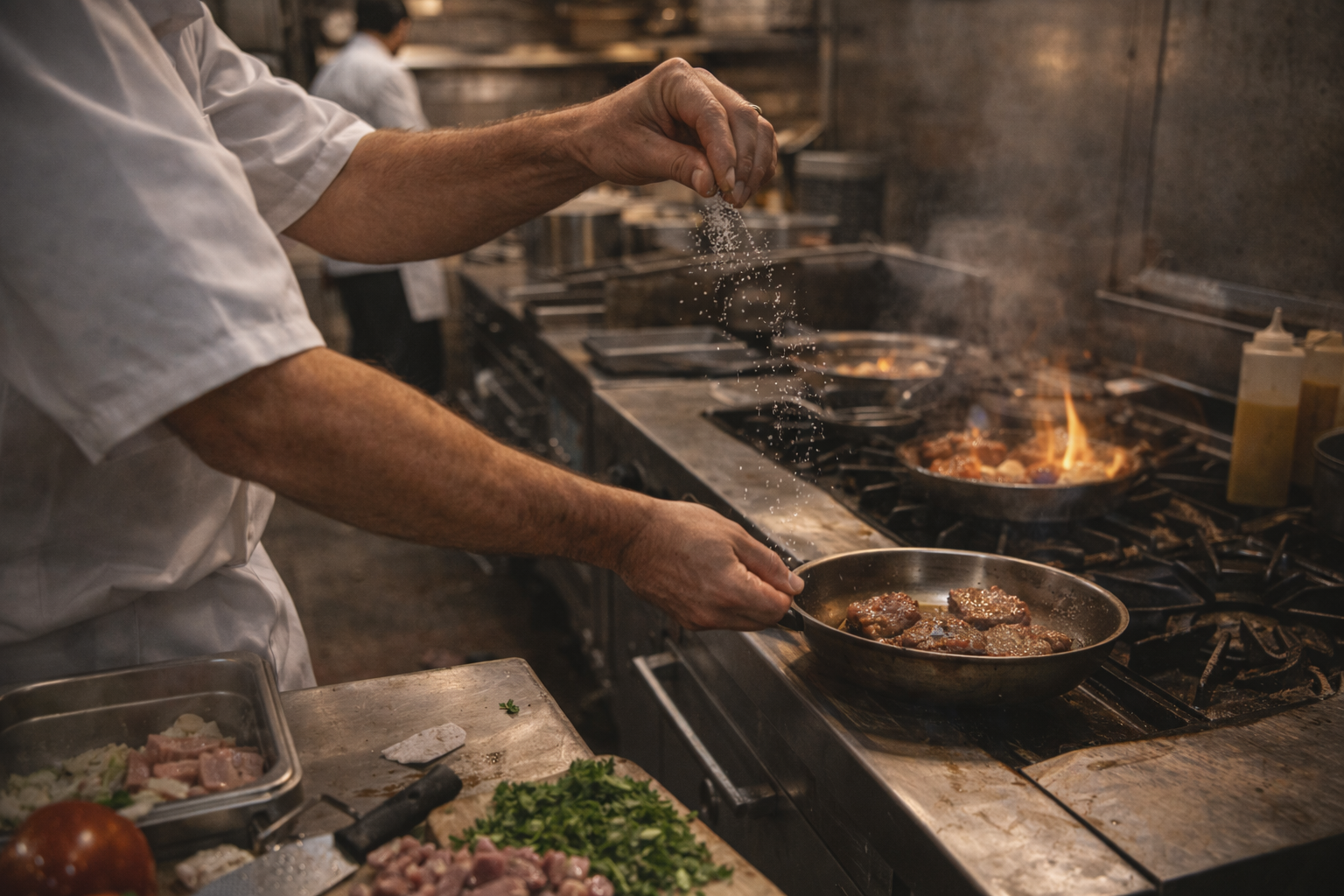
There are two kinds of cooking knowledge. There's the kind you can read — ratios, temperatures, the science of emulsification. And there's the kind that lives in your hands.
The feel of properly developed dough. The sound of a correct sear. The instinct for when a sauce is thirty seconds from breaking.
The second kind only comes from repetition, and it's what separates cooks who are capable from cooks who are good. These videos are worth watching more than once. A great demonstration of knife work isn't educational the first time — it's educational the twentieth time, when you've done the cut yourself a hundred times and can finally see the specific thing you're still getting wrong.
Why Watching Isn't the Same as Learning
A skilled cook makes everything look easy, and that's the trap. The knife glides through the onion because a thousand hours of practice found the exact grip, angle, and motion that eliminates resistance. The sauce comes together in seconds because the cook knows instinctively when the temperature is right and how much fat to add.
None of it was natural. All of it was built through deliberate practice, usually with someone standing next to them correcting their wrist angle or their pan technique. Video can't correct your wrist.
But it can show you what correct looks like, clearly and repeatedly, so that when you practice, you know what you're aiming for. Watch carefully. Practice slowly.
Watch again and find what you missed.
Why Watching Isn't the Same as Learning
A skilled cook makes everything look easy, and that's the trap. The knife glides through the onion because a thousand hours of practice found the exact grip, angle, and motion that eliminates resistance. The sauce comes together in seconds because the cook knows instinctively when the temperature is right and how much fat to add.
None of it was natural. All of it was built through deliberate practice, usually with someone standing next to them correcting their wrist angle or their pan technique. Video can't correct your wrist.
But it can show you what correct looks like, clearly and repeatedly, so that when you practice, you know what you're aiming for. Watch carefully. Practice slowly.
Watch again and find what you missed.
“A great demonstration isn't educational the first time. It's educational the twentieth.”
The Foundations Worth Practicing
427 videosVideos on knife skills, cooking fundamentals, plating techniques, and the craft behind professional cooking at every level.
8 videos tagged “Indian”

Focaccia vs Naan with Richard Bertinet and Vineet Bhatia | Meet your Maestro | BBC Maestro
Flatbread is universal. Every culture has one, and focaccia and naan are two of the finest. Bertinet dimples his with olive oil and rosemary; Bhatia slaps his against imaginary tandoor heat. Side by side, they reveal how the same impulse — flour, water, heat — produces radically different textures depending on which tradition shaped your hands.

How to prepare a South-Indian pachadi with Vineet Bhatia | Meet Your Maestro | BBC Maestro
Pachadi is the condiment that most of the Western world has never heard of, and that is a shame. Bhatia prepares a South-Indian version — yogurt-based, tempered with mustard seeds and curry leaves — that could change the way you think about what belongs next to rice. Ten minutes to add an entirely new texture to your repertoire.

Preparing a travel-inspired stir fry with Vineet Bhatia | Meet Your Maestro | BBC Maestro
When a Michelin-starred Indian chef travels, he does not leave his palate at home. Bhatia brings back a stir fry shaped by every market he has walked through — Southeast Asian heat, Indian aromatics, and the kind of wok technique that only comes from cooking fast and often. This is what happens when curiosity meets craft in a hot pan.

How to marinate meat to perfection with Vineet Bhatia | Meet your Maestro | BBC Maestro
Marination in Indian cooking is not a suggestion — it is the foundation. Bhatia explains why yogurt breaks down protein differently from acid, why spice contact time changes everything, and why the marinades in most Western cookbooks miss the point entirely. Ten minutes that will change the way you think about what happens to meat before it hits heat.

Preparing an iconic Indian onion bhaji with Vineet Bhatia | Meet Your Maestro | BBC Maestro
Onion bhaji is street food, snack food, comfort food — and in most restaurants outside India, it is frozen food reheated badly. Bhatia reclaims it. His version is crisp, fragrant, and structurally sound, built from scratch with chickpea flour and spices that actually taste like something. If your kitchen serves bhajis from a box, this is the video that should make you stop.

NEVER buy Garam Masala again with Vineet Bhatia | Meet your Maestro | BBC Maestro
Store-bought garam masala is a ghost of the real thing — stale, homogeneous, stripped of everything that makes the blend alive. Bhatia toasts whole spices and grinds them in real time, and the difference is not subtle. It is the difference between hearing a song through a phone speaker and hearing it live. Eleven minutes to retire that dusty jar in your spice drawer forever.

How To MAINTAIN YOUR KNIVES Like A PRO CHEF | Ultimate KNIFE CARE Guide | Dalstrong
Your knife is the only tool that follows you from station to station, kitchen to kitchen, job to job — and most cooks treat it like a rental car. Dalstrong breaks down the maintenance that separates professionals from weekend warriors: proper honing angles, when to sharpen versus when to hone, and why that crusty old chef always kept his blade sharper than his tongue. Twenty minutes of care can save you twenty shifts of fighting dull steel.
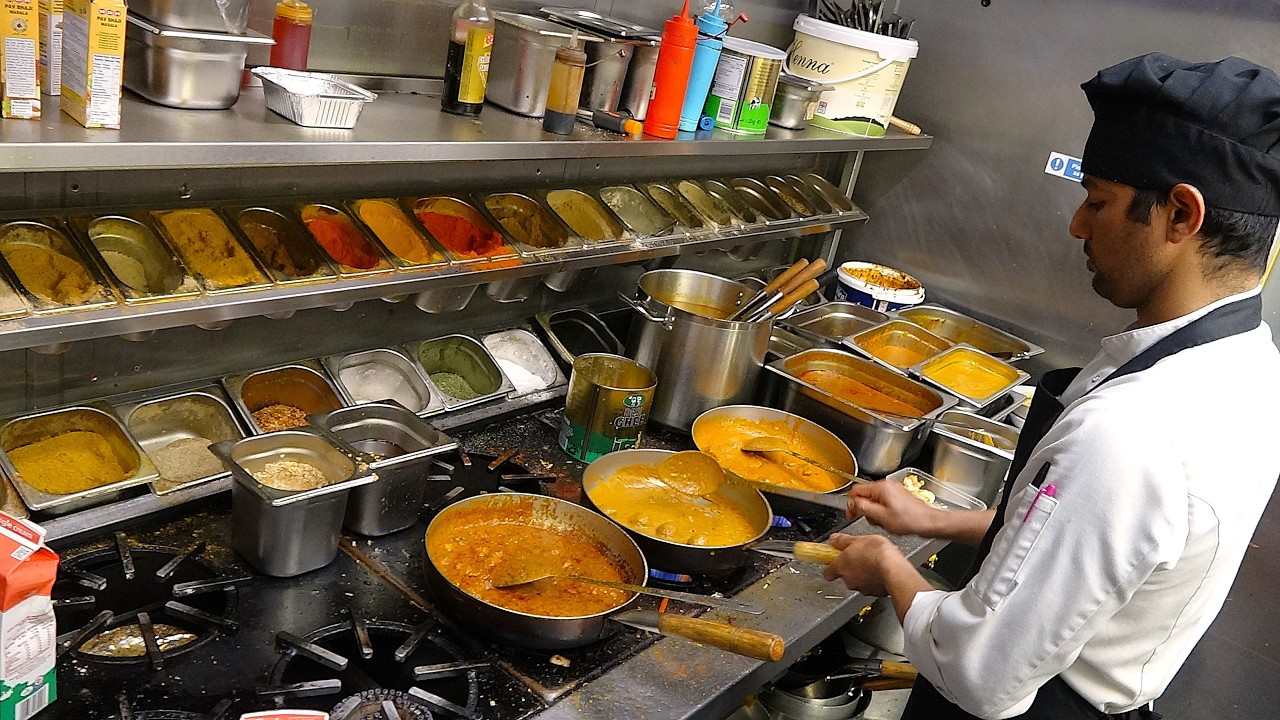
Paneer Butter Masala | Malai Kofta | Subz Biryani | Punjabi Chole | Jamun Indian Restaurant Brighton
The chef at Jamun moves through four classic North Indian preparations like muscle memory — paneer butter masala to malai kofta without breaking rhythm, each spice blend built from scratch while three other pans demand attention. You can see twenty years in how he blooms whole cumin, times the tomato reduction, keeps that biryani rice from going to mush. This is the kind of systematic mise and multi-tasking that separates weekend warriors from the professionals who can actually run a curry station during service.
A cook who can break down a case of onions in ten minutes has twenty more minutes for everything else on the prep list. After the knife: heat management. Reading a pan.
Knowing the difference between a sear and a steam. Understanding what oil temperature actually sounds like. Then plating — not as decoration, but as the final step in communicating what the dish is supposed to be.
Each skill builds on the one before it, and none of them have shortcuts.
Technique and equipment are inseparable — understanding your tools is part of executing properly. Equipment & Tools goes deeper on the gear. For the business context that makes these skills valuable, Cost Control and Menu Design show how craft translates into a menu that works financially.