Technique & Skill
There are two kinds of cooking knowledge. There's the kind you can read — ratios, temperatures, the science of emulsification. And there's the kind that lives in your hands.
The feel of properly developed dough. The sound of a correct sear. The instinct for when a sauce is thirty seconds from breaking.
The second kind only comes from repetition, and it's what separates cooks who are capable from cooks who are good. These videos are worth watching more than once. A great demonstration of knife work isn't educational the first time — it's educational the twentieth time, when you've done the cut yourself a hundred times and can finally see the specific thing you're still getting wrong.
Why Watching Isn't the Same as Learning
A skilled cook makes everything look easy, and that's the trap. The knife glides through the onion because a thousand hours of practice found the exact grip, angle, and motion that eliminates resistance. The sauce comes together in seconds because the cook knows instinctively when the temperature is right and how much fat to add.
None of it was natural. All of it was built through deliberate practice, usually with someone standing next to them correcting their wrist angle or their pan technique. Video can't correct your wrist.
But it can show you what correct looks like, clearly and repeatedly, so that when you practice, you know what you're aiming for. Watch carefully. Practice slowly.
Watch again and find what you missed.
Why Watching Isn't the Same as Learning
A skilled cook makes everything look easy, and that's the trap. The knife glides through the onion because a thousand hours of practice found the exact grip, angle, and motion that eliminates resistance. The sauce comes together in seconds because the cook knows instinctively when the temperature is right and how much fat to add.
None of it was natural. All of it was built through deliberate practice, usually with someone standing next to them correcting their wrist angle or their pan technique. Video can't correct your wrist.
But it can show you what correct looks like, clearly and repeatedly, so that when you practice, you know what you're aiming for. Watch carefully. Practice slowly.
Watch again and find what you missed.
“A great demonstration isn't educational the first time. It's educational the twentieth.”
The Foundations Worth Practicing
427 videosVideos on knife skills, cooking fundamentals, plating techniques, and the craft behind professional cooking at every level.
14 videos tagged “Jacques Pepin”

Jacques Pépin ensina como fazer omelete francesa
Pépin's hands move like they've made ten thousand of these — no hesitation, no second-guessing the heat, just muscle memory and a fork that knows exactly when to stop. You can teach someone the motions in five minutes, but watch his wrist action on the fold and you'll understand why most line cooks spend years getting their omelets to stop looking like scrambled eggs wrapped in rubber. The difference between knowing the technique and owning it lives in those thirty seconds between pan and plate.
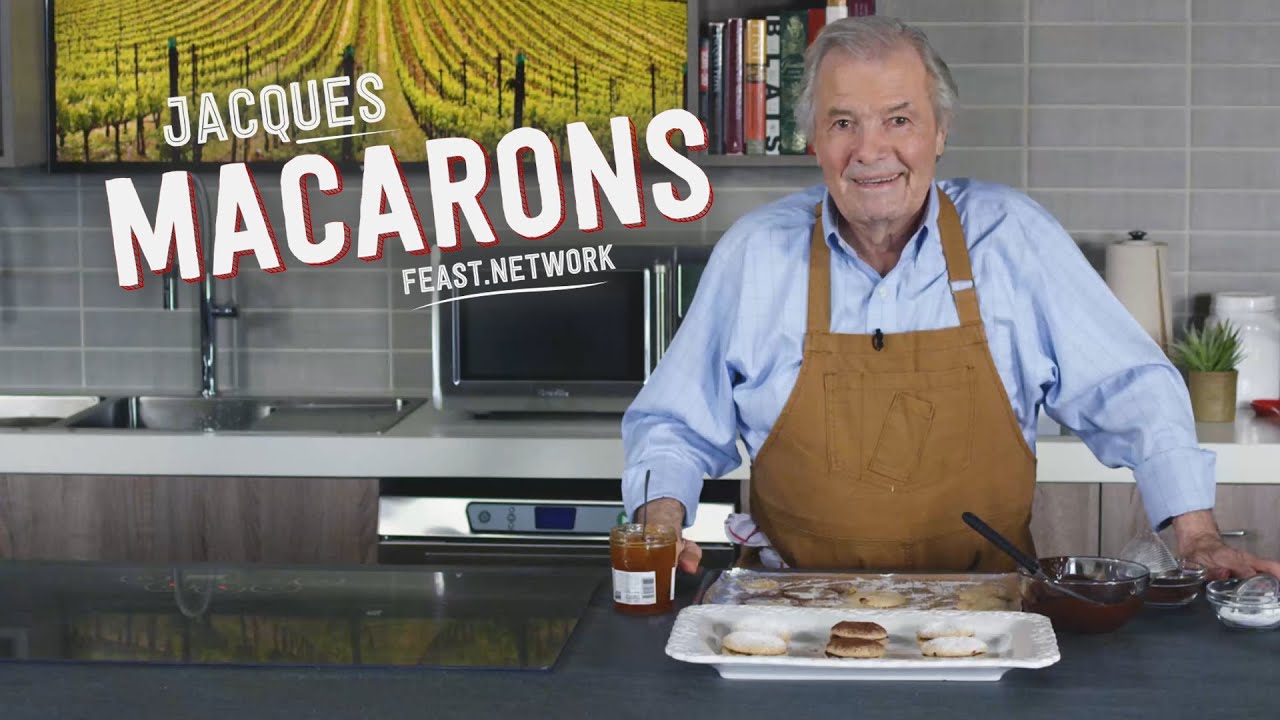
Macarons
You watch Jacques Pépin fold almond flour into meringue like he's handling silk, each movement deliberate and earned through decades of repetition. The man's pushing ninety and still demonstrates why macarons separate the weekend warriors from the technicians — perfect macaronage isn't about following steps, it's about reading the batter's body language. Most pastry cooks spend months learning when to stop folding; Pépin shows you in real time what "flowing like lava" actually means.
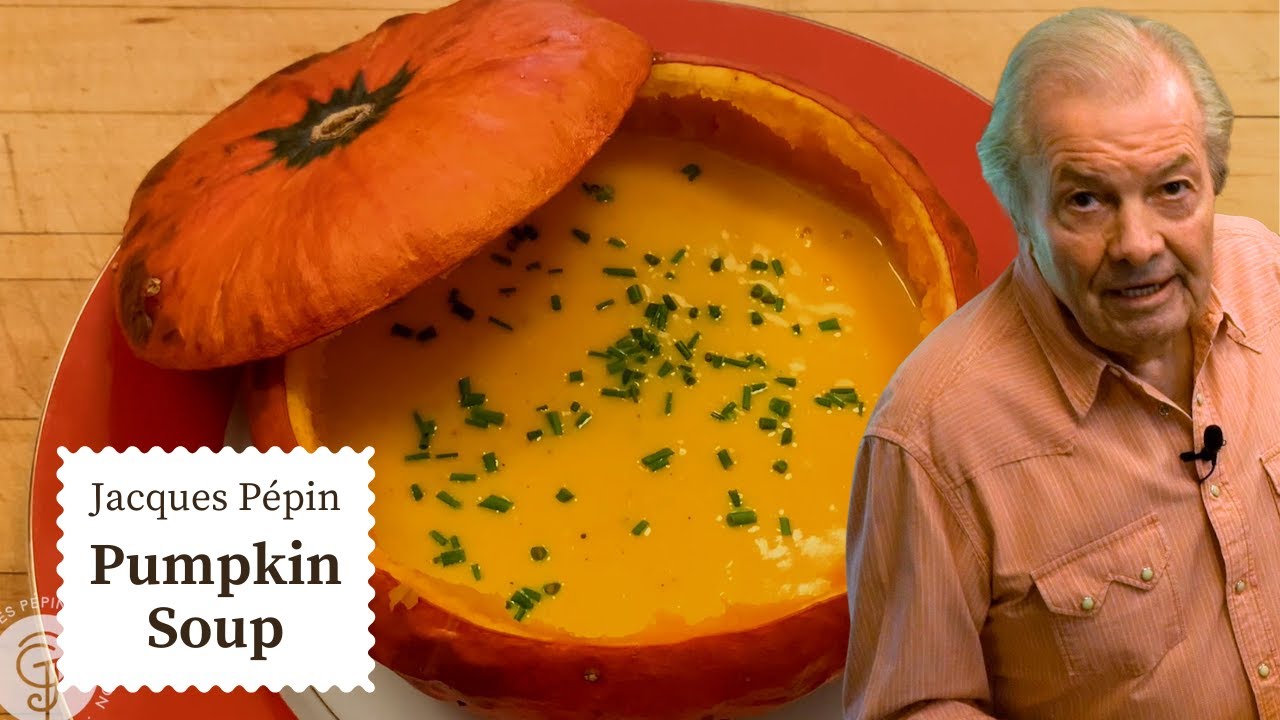
Fantastic Pumpkin Soup Recipe from Jacques Pépin | Cooking at Home | KQED
Watch Pépin work a pumpkin and you'll see forty years of knife skills distilled into muscle memory — every cut deliberate, every motion efficient, the kind of economy that only comes from doing something ten thousand times. The man builds flavor in layers you can actually taste through the screen, each step a small lecture in why shortcuts never shortcut anything that matters. You've probably made pumpkin soup before, but you haven't made it like this.

Macaroni and Cheese with Breadcrumbs | Jacques Pépin Cooking At Home | KQED
Jacques Pépin turns mac and cheese into a masterclass on why technique matters more than ingredients — watch how he builds that roux, how his knife work on the breadcrumbs stays consistent even when he's barely looking. You can tell he's made ten thousand sauces by the way his wrist moves, the way he knows exactly when the flour is cooked out without tasting. Anyone who's ever broken a béchamel trying to rush it knows what forty years of muscle memory looks like.

Jacques Pépin's Maman's Cheese Soufflé | Genius Recipes
Jacques Pépin's mother didn't need to prove anything to anyone — she just needed to feed her family a soufflé that wouldn't collapse if someone sneezed in the next room. While culinary school teaches you seventeen ways to fold egg whites and lecture about proper ramekin preparation, Maman's version strips away the theater and shows you what actually works on a Tuesday night when the stove runs hot and the oven door gets slammed. You either trust the technique or you don't. The soufflé knows the difference.

Fast Cheese Soufflé
Jacques Pépin makes a soufflé look like whisking eggs — no drama, no ceremony, just forty years of muscle memory moving through the steps while he talks about his grandmother's kitchen. You watch his hands work the roux and realize there's nothing fast about this except the confidence that comes from doing something ten thousand times until it becomes automatic. The kind of technique that separates the cooks who've been there from the ones still checking recipes twice.
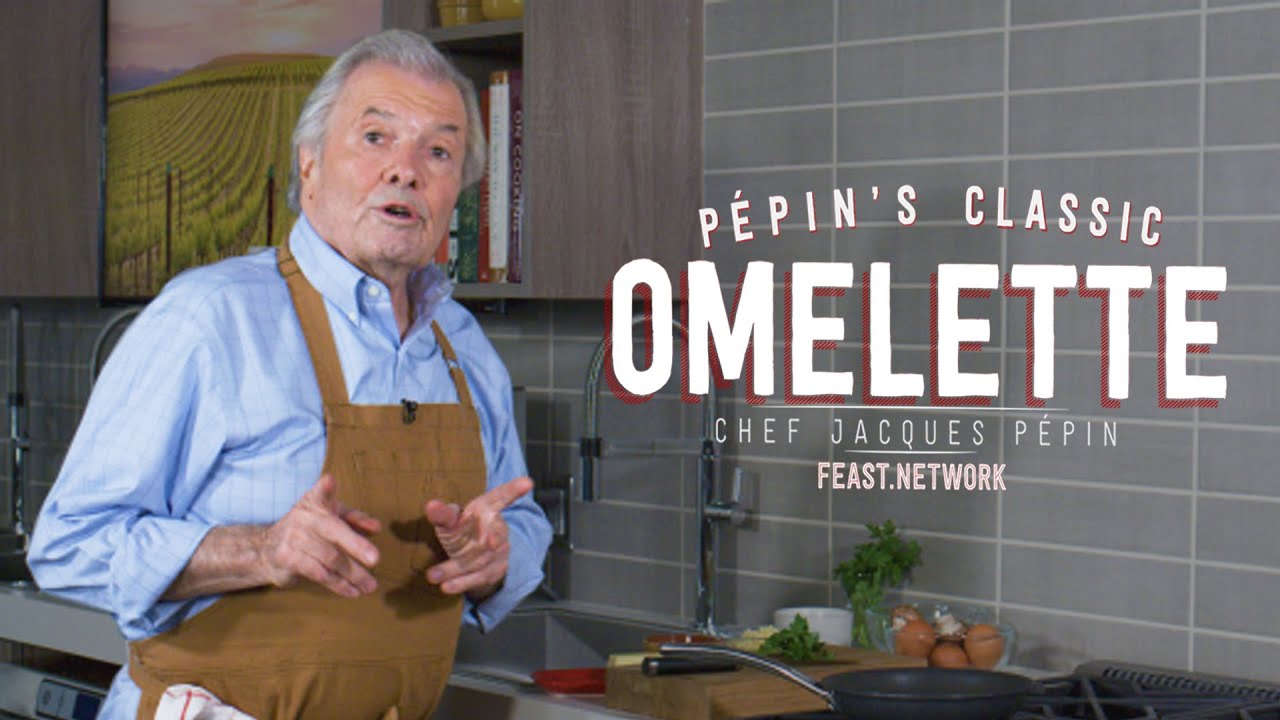
Pépin's Classic Omelette
Watch Pépin work eggs with a fork in a screaming hot pan, and you'll see thirty seconds of motion that took thirty years to perfect. The man makes it look like a conversation between butter and heat, but anyone who's burned through a case of eggs learning this knows the truth underneath the grace. This is what mastery looks like when the camera's rolling and when it's not.
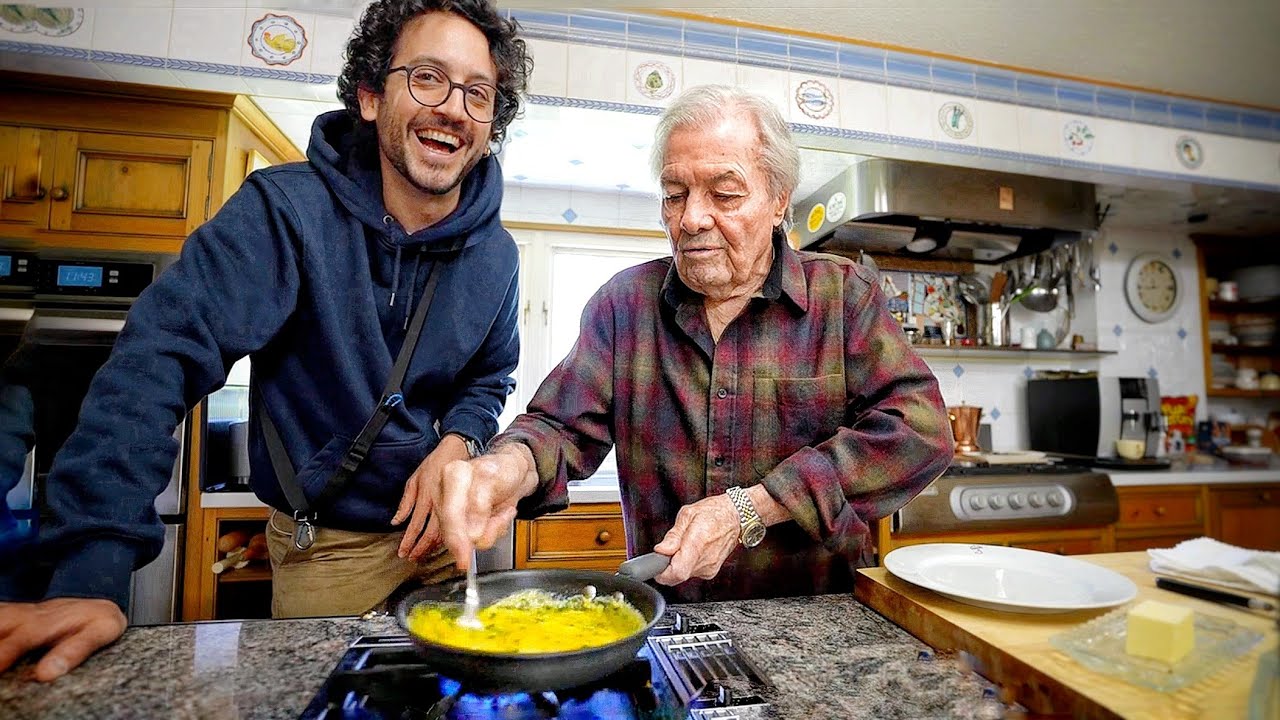
The Day I Met The OMELETTE GOD (Jacques Pépin)
You can spot a real chef by how they handle an egg — and Jacques Pépin moves like someone who's cracked about a million of them. The man makes an omelette the way most people tie their shoes: muscle memory so deep it looks effortless, but try it yourself and you'll remember why technique matters more than inspiration. Alex gets it too, treating this like the masterclass it is instead of just another YouTube collab.

French Omelette, In Stainless Steel pan inspired by Jacques Pepin | Christine Cushing
You can make a decent omelette in nonstick, but doing it in stainless steel is where you separate the line cooks from the prep cooks. Christine Cushing walks through the Pépin method with the kind of control that only comes from burning through a few hundred eggs first. The pan work here — the angle, the rhythm, the moment she knows to fold — that's muscle memory talking.
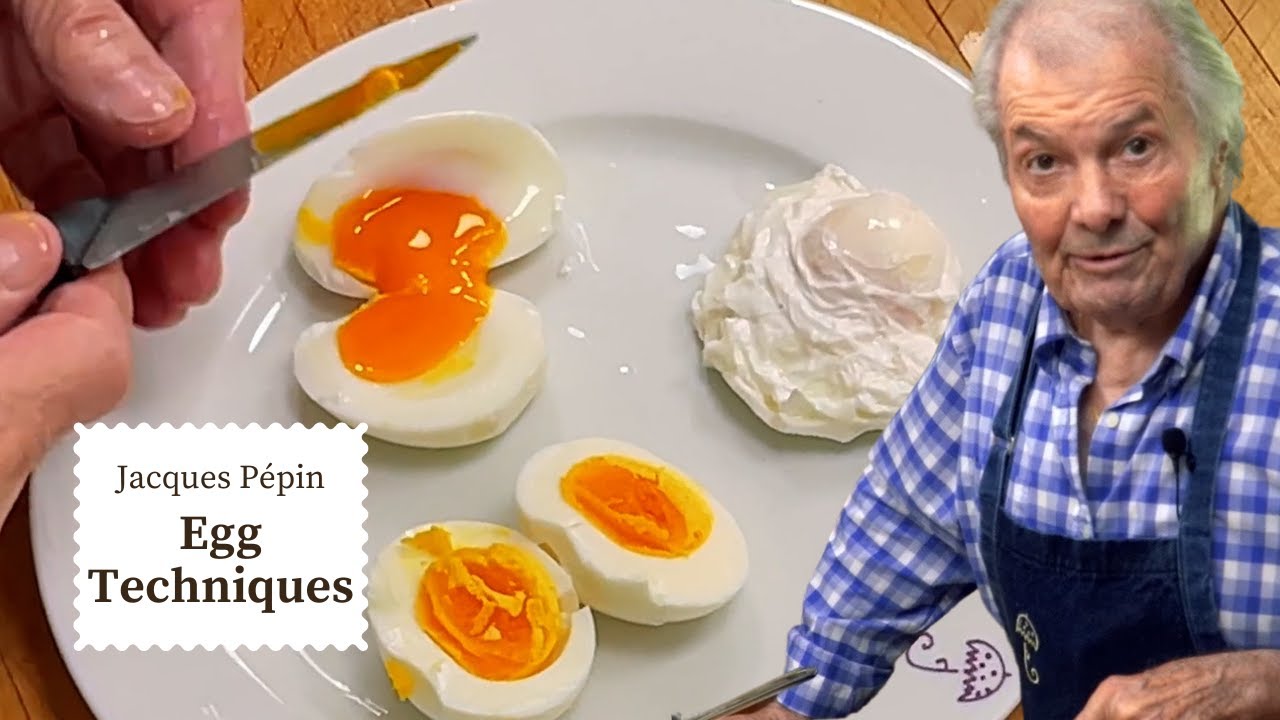
The Secret to Perfectly Cooked Eggs | Jacques Pépin Cooking at Home | KQED
Jacques Pépin handles eggs like a man who's cracked ten thousand of them, maybe twenty—the kind of muscle memory that only comes from decades of service where getting the whites wrong meant getting screamed at. Watch his hands work the pan, the way he drops the temperature just so, how he knows exactly when that yolk will set. This isn't Instagram egg porn. This is what happens when technique becomes instinct.

Jacques Pépin: How To Properly Poach An Egg | KQED Food
Jacques Pépin moves through poaching eggs like he's done it ten thousand times — because he has, and every small adjustment he makes carries the weight of decades on the line. You can teach someone to crack an egg into simmering water in five minutes, but the hand that knows exactly when the white has set, that can read the water's mood and adjust the heat without thinking — that takes years. This is what mastery looks like when the cameras aren't rolling and there's a full rail waiting.

Sauteed Steak
Watch Pépin work a pan and you'll see forty years of muscle memory condensed into four minutes of pure technique. The way he reads the sear, adjusts the heat without thinking, lets the steak tell him when it's ready — this is what separates the cooks from the line veterans. You either have those hands or you're still learning to get them.

Classic Roast Chicken Ultimate Guide | Jacques Pépin Cooking at Home | KQED
Jacques Pépin breaks down roast chicken like he's teaching someone who'll have to turn out 200 covers on a Tuesday night — every movement deliberate, every step building toward something that actually works when the tickets start flying. Watch his hands work the bird: no wasted motion, no Instagram flourishes, just forty years of muscle memory distilled into moves you can steal and make your own. This is what technique looks like when it's been tested by fire and found worthy.
Learn Jacques Pépin's famous omelet techniques
I've watched a thousand cooks butcher eggs into rubber medallions, but Pépin's omelet technique is pure poetry—the kind of foundational skill that separates line cooks from chefs. Watch this master work and you'll understand why the French treat eggs like a religion, not a convenience food.
A cook who can break down a case of onions in ten minutes has twenty more minutes for everything else on the prep list. After the knife: heat management. Reading a pan.
Knowing the difference between a sear and a steam. Understanding what oil temperature actually sounds like. Then plating — not as decoration, but as the final step in communicating what the dish is supposed to be.
Each skill builds on the one before it, and none of them have shortcuts.
Technique and equipment are inseparable — understanding your tools is part of executing properly. Equipment & Tools goes deeper on the gear. For the business context that makes these skills valuable, Cost Control and Menu Design show how craft translates into a menu that works financially.