Technique & Skill
There are two kinds of cooking knowledge. There's the kind you can read — ratios, temperatures, the science of emulsification. And there's the kind that lives in your hands.
The feel of properly developed dough. The sound of a correct sear. The instinct for when a sauce is thirty seconds from breaking.
The second kind only comes from repetition, and it's what separates cooks who are capable from cooks who are good. These videos are worth watching more than once. A great demonstration of knife work isn't educational the first time — it's educational the twentieth time, when you've done the cut yourself a hundred times and can finally see the specific thing you're still getting wrong.
Why Watching Isn't the Same as Learning
A skilled cook makes everything look easy, and that's the trap. The knife glides through the onion because a thousand hours of practice found the exact grip, angle, and motion that eliminates resistance. The sauce comes together in seconds because the cook knows instinctively when the temperature is right and how much fat to add.
None of it was natural. All of it was built through deliberate practice, usually with someone standing next to them correcting their wrist angle or their pan technique. Video can't correct your wrist.
But it can show you what correct looks like, clearly and repeatedly, so that when you practice, you know what you're aiming for. Watch carefully. Practice slowly.
Watch again and find what you missed.
Why Watching Isn't the Same as Learning
A skilled cook makes everything look easy, and that's the trap. The knife glides through the onion because a thousand hours of practice found the exact grip, angle, and motion that eliminates resistance. The sauce comes together in seconds because the cook knows instinctively when the temperature is right and how much fat to add.
None of it was natural. All of it was built through deliberate practice, usually with someone standing next to them correcting their wrist angle or their pan technique. Video can't correct your wrist.
But it can show you what correct looks like, clearly and repeatedly, so that when you practice, you know what you're aiming for. Watch carefully. Practice slowly.
Watch again and find what you missed.
“A great demonstration isn't educational the first time. It's educational the twentieth.”
The Foundations Worth Practicing
427 videosVideos on knife skills, cooking fundamentals, plating techniques, and the craft behind professional cooking at every level.
21 videos tagged “Pierre Koffmann”

Classic French rabbit stew done right with Pierre Koffmann | Meet your Maestro | BBC Maestro
Rabbit has vanished from most modern menus, replaced by safer proteins that offend nobody. Koffmann pulls it back into the light with a stew that tastes like rural France — thyme, mustard, wine, and time. If you have access to good rabbit and a heavy pot, this recipe is an argument for cooking the animals that your grandparents knew by name.

Perfect pistachio soufflé prepared with Pierre Koffmann | Meet Your Maestro | BBC Maestro
A souffle is a promise — rise and fall, glory and collapse, all in the span of a service window. Koffmann's pistachio version adds a layer of nuttiness that deepens the sweetness without masking it. The technique is exacting: fold too hard and it dies, fold too gently and the batter stays raw in the center. Pastry is precision, and this is proof.
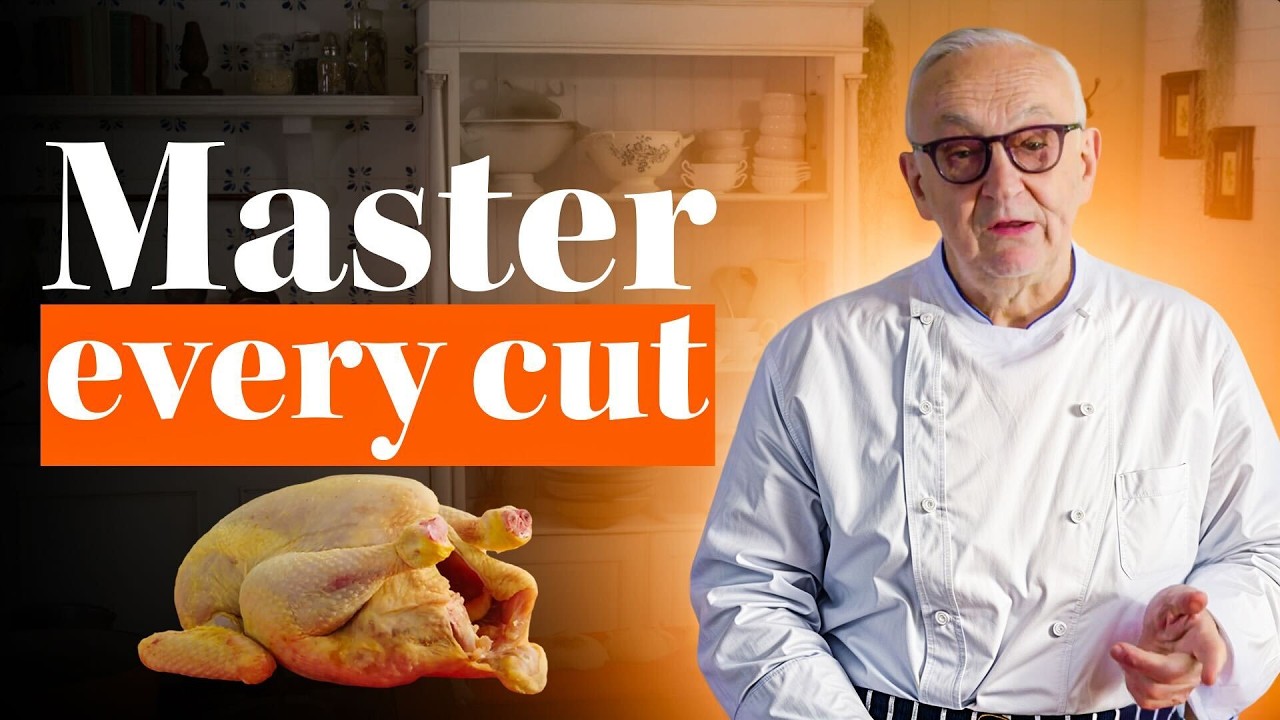
Master the art of meat cutting with Pierre Koffmann | Meet your Maestro | BBC Maestro
Before the sear, before the sauce, before the plate — there is the cut. Koffmann's knife work is a lesson in anatomy: understanding where the muscle runs, where the grain changes direction, where the fat caps protect the flesh. Nine minutes of watching a master butcher a piece of meat will teach you more about cooking than most hour-long tutorials.

A unique but delicious scallop dish with chef Pierre Koffmann | Meet Your Maestro | BBC Maestro
Another scallop, another Koffmann masterclass. But this one diverges from the classic sear-and-serve — he takes the dish somewhere unexpected, proving that even at eighty a chef can still surprise you with an ingredient he has cooked ten thousand times. The mark of a great cook is not knowing one way. It is knowing twelve and choosing the right one.

A unique squid bolognaise prepared with Pierre Koffmann | Meet Your Maestro | BBC Maestro
Squid bolognaise sounds like a mistake on a specials board. In Koffmann's hands it becomes a lesson in lateral thinking — taking the logic of a meat ragu and applying it to cephalopod. The texture is different, the timing changes, but the underlying principle holds: low heat, patience, and faith that the ingredient will yield if you give it enough time.

How to prepare and cook artichoke with Pierre Koffmann | Meet Your Maestro | BBC Maestro
Artichokes punish carelessness. Turn them wrong and they oxidize. Cook them too long and they dissolve. Koffmann treats the preparation as meditation — each leaf stripped with purpose, the choke removed in one clean motion. It is the kind of vegetable prep that separates a trained chef from someone following a recipe card.

The beauty of simple sea bass with Pierre Koffmann | Meet your Maestro | BBC Maestro
Sea bass is the fish that every restaurant puts on its menu and half of them overcook. Koffmann keeps it simple — crisp skin, gentle heat, a pan sauce that does not overwhelm the fish. The beauty is in the restraint, in knowing that a great piece of fish needs a chef who is willing to step back and let the ingredient speak.
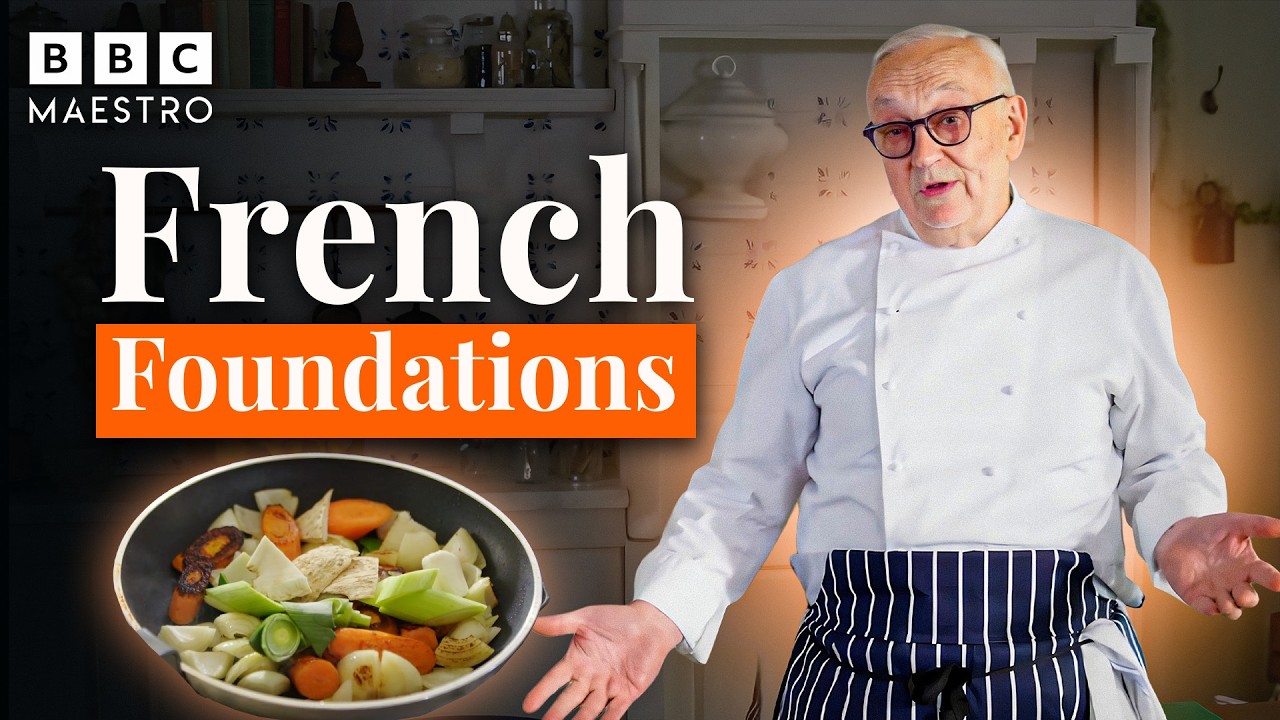
How to create the iconic ‘French veal stock’ with Pierre Koffmann | Meet Your Maestro | BBC Maestro
Everything begins with stock. Every sauce, every braise, every reduction traces its lineage back to this pot. Koffmann builds a classic French veal stock the way his mentors built theirs — roasted bones, mirepoix, hours of patience. If your kitchen does not make its own stock, this ten minutes will either inspire you to start or make you feel guilty for not starting sooner.
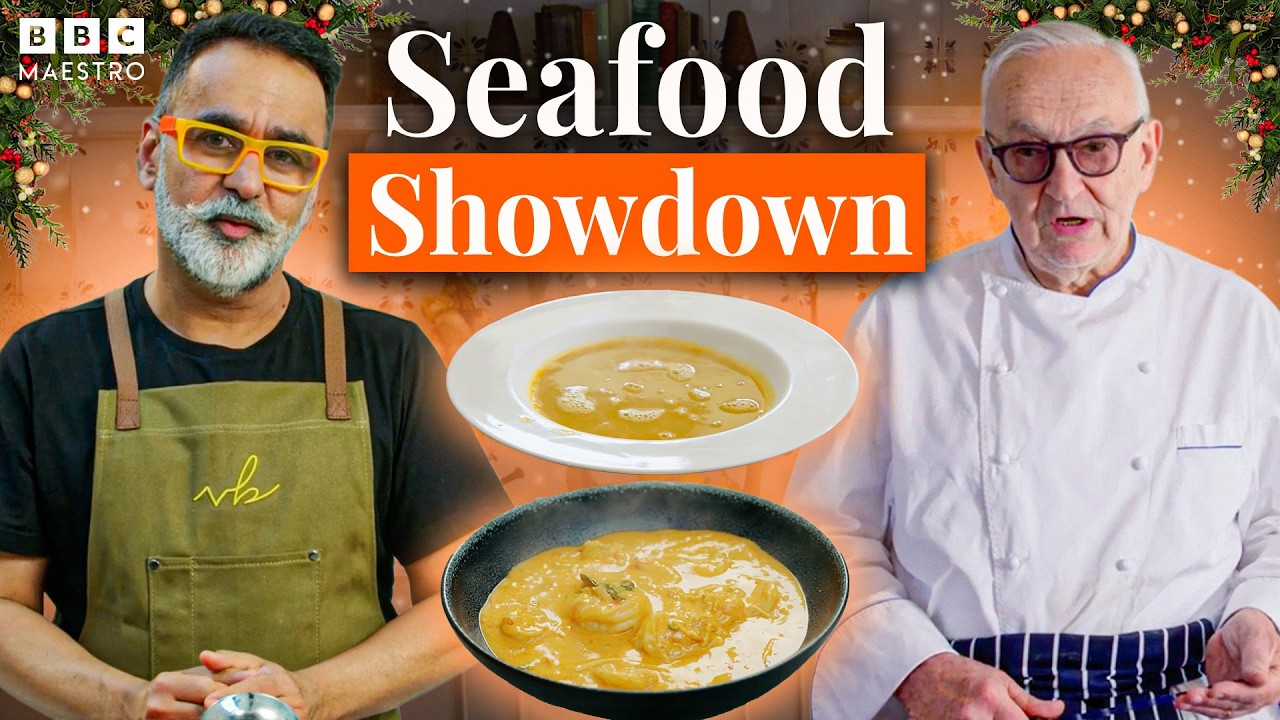
Fish soup vs prawn stew with Pierre Koffmann and Vineet Bhatia | BBC Maestro
Two soups, two continents, one conversation. Koffmann builds his fish soup on the Provencal blueprint — saffron, fennel, rouille on the side. Bhatia answers with a prawn stew that carries the weight of the Indian Ocean in every spoonful. Twenty-five minutes of watching two masters cook the sea in entirely different languages.

The secret to perfect lamb stew with Pierre Koffmann | Meet your Maestro | BBC Maestro
A lamb stew should taste like it took all day. Koffmann's does, because it did. There are no shortcuts here — no pressure cooker hacks, no quick weeknight promises. Just browned meat, slow heat, and the kind of patience that most home cooks have unlearned in the age of thirty-minute meals. The reward is a pot of something that makes a cold evening feel earned.

Venison with red wine and raspberry sauce - Pierre Koffmann | BBC Maestro
Game meat intimidates home cooks and bores restaurant diners who have seen one too many venison specials. Koffmann splits the difference — a dish sophisticated enough for a tasting menu but explained clearly enough for a Tuesday night. The raspberry in the sauce is the twist that lifts everything, a reminder that the best French cooking has always known when sweetness belongs on a savory plate.

The foundation of great steak tartare with Pierre Koffmann | Meet your Maestro | BBC Maestro
Raw beef, a sharp knife, and sixty years of experience. Koffmann's steak tartare is not the Instagram version — it is the original, the version that requires a chef who can season by instinct and cut by feel. Watch his hands. They move the way a violinist's do: trained so deeply that the conscious mind has stepped aside.

Cook liver like a real chef with Pierre Koffmann | Meet your Maestro | BBC Maestro
Liver separates professionals from hobbyists. It demands speed, heat, and the nerve to serve it pink when every instinct says cook it through. Koffmann handles it the way all great French chefs do — with conviction. The iron tang, the caramelized crust, the shallot sauce: this is offal cooking that makes you wonder why liver ever fell out of fashion.
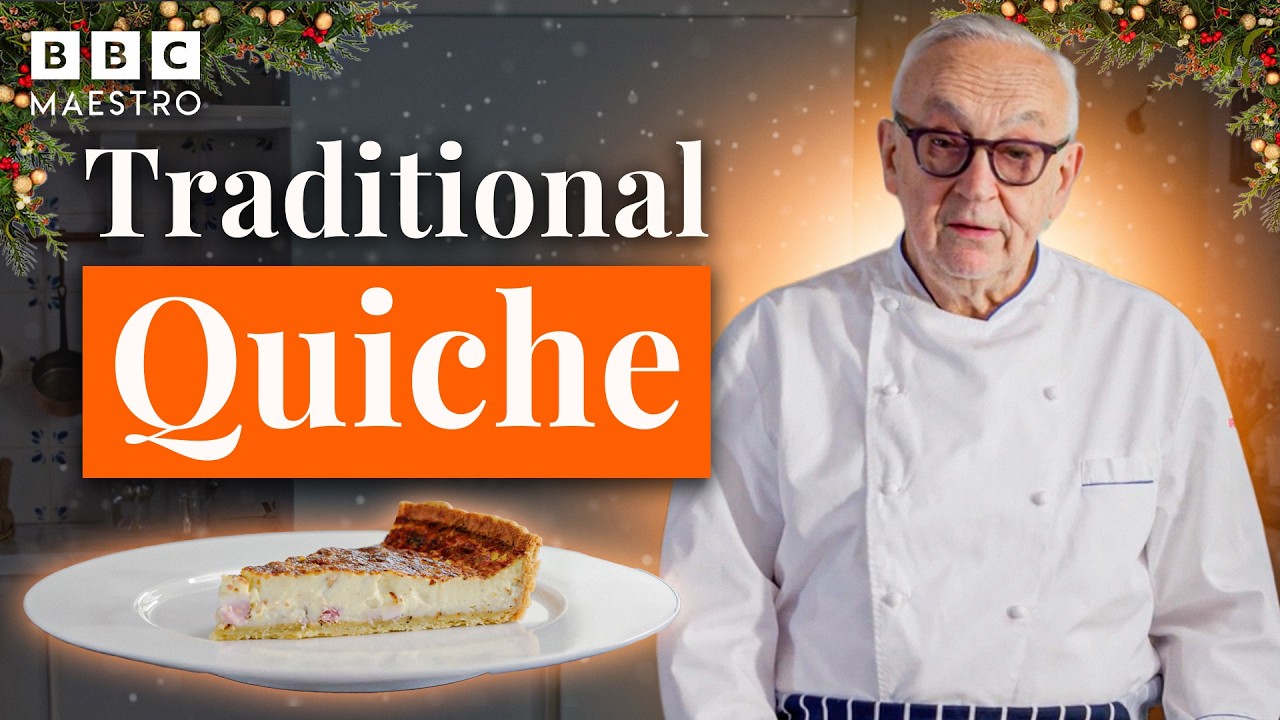
Traditional homemade Quiche Lorraine with Pierre Koffmann | Meet Your Maestro | BBC Maestro
A proper quiche Lorraine is not what most bakeries sell. It is not a soggy egg pie with industrial ham. Koffmann's version is an architecture lesson — blind-baked pastry, rendered lardons, a custard set to a trembling center that barely holds. The distance between this and what passes for quiche in most cafes is the distance between cooking and assembling.

The right way to make Michelin-level mash with Pierre Koffmann | Meet your Maestro | BBC Maestro
Mashed potato at a Michelin level means one thing: Robuchon ratios. Butter to potato, cream to starch, pass through a sieve until your arm aches. Koffmann knows this because he worked in the same classical tradition, and his version rivals anything served in a three-star dining room. If you serve mash and have never weighed your butter, start here.
The ONLY hollandaise recipe you’ll ever need with Pierre Koffmann | Meet your Maestro | BBC Maestro
Hollandaise breaks. Every chef knows this. It splits when you look away, when the heat spikes, when the egg yolk decides it has had enough. Koffmann's version is not accident-proof — nothing is — but his technique minimizes every variable. If your brunch hollandaise has been giving you grief, the fix is probably in this twelve-minute window.

Cook the perfect coq au vin with Pierre Koffmann | Meet your Maestro | BBC Maestro
Coq au vin is peasant food that pretends to be nothing else, and Koffmann treats it accordingly — no molecular foam, no tweezered microgreens, just braised chicken in wine done with the certainty of a man who grew up eating it. The recipe is a time machine to the Gascony farmhouse where his grandmother taught him what a stove was for.

Michelin level scallops made EASY with Pierre Koffmann | Meet your Maestro | BBC Maestro
Koffmann calls these easy, and from his hands they are. But easy from a man who held three Michelin stars at La Tante Claire for over a decade is a relative term. The sear, the butter, the timing — each step looks effortless because it has been practiced past the point of thought. That gap between simple and easy is where the craft lives.
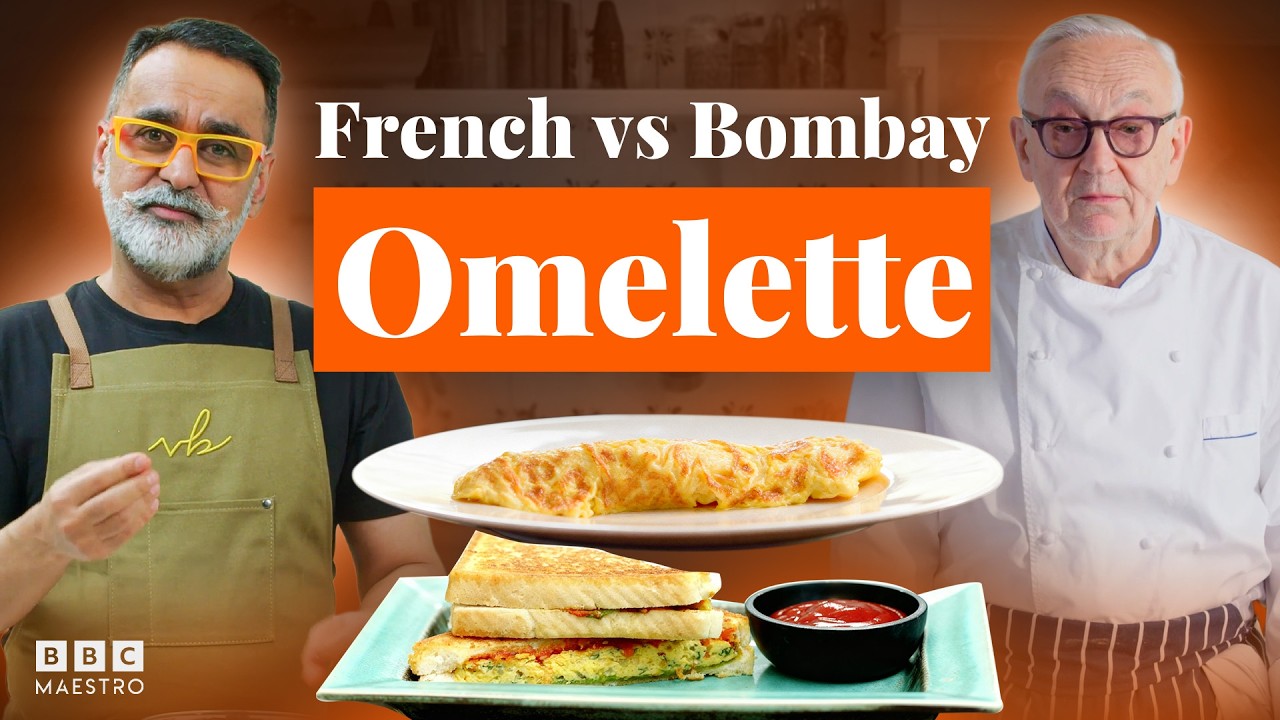
French vs Bombay omelette with Pierre Koffmann and Vineet Bhatia | BBC Maestro
France meets Mumbai in a pan. Koffmann rolls his omelette the classical way — pale, trembling, barely set. Bhatia hits his with spice, color, and heat that would make Escoffier blink. Neither is wrong. Both are perfect within their tradition. The value here is not choosing a winner but understanding that mastery looks completely different depending on where you learned to crack an egg.
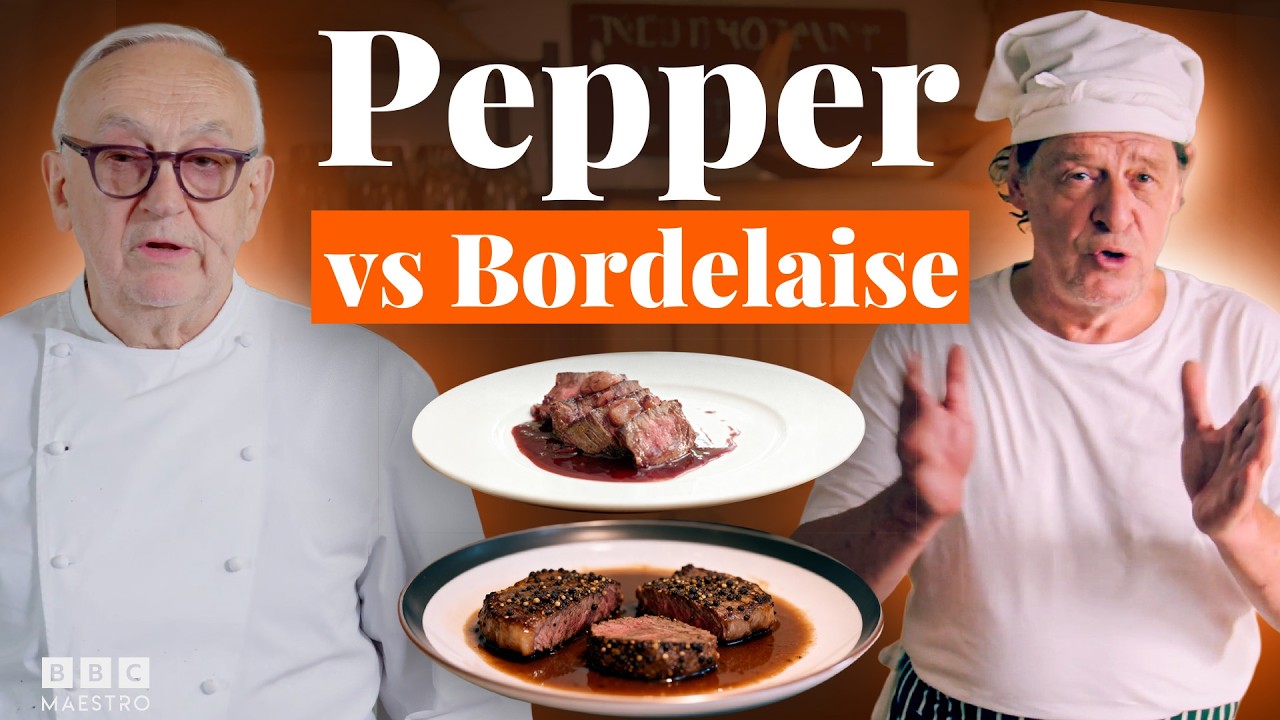
Steak au Poivre vs Fillet Bordelaise with Marco Pierre White and Pierre Koffmann | BBC Maestro
Two legends. Two cuts. Two sauces. When Marco Pierre White and Pierre Koffmann stand at the same stove, you are watching seventy combined years of classical French training collide. The steak au poivre is theatre; the bordelaise is discipline. Together, they make the case that the golden age of restaurant cooking never really ended — it just went back to fundamentals.

The ONLY duck confit recipe you'll ever need with Pierre Koffmann | Meet your Maestro | BBC Maestro
Pierre Koffmann renders duck legs in their own fat like he's conducting an orchestra — every movement deliberate, every timing cue earned through decades on the line. You watch his hands work the salt cure, the way he tests doneness without even thinking about it, and you realize this isn't a recipe you learn from a video. This is muscle memory built over 40 years of service, distilled into four minutes of technique that most cooks will spend years trying to replicate properly.
A cook who can break down a case of onions in ten minutes has twenty more minutes for everything else on the prep list. After the knife: heat management. Reading a pan.
Knowing the difference between a sear and a steam. Understanding what oil temperature actually sounds like. Then plating — not as decoration, but as the final step in communicating what the dish is supposed to be.
Each skill builds on the one before it, and none of them have shortcuts.
Technique and equipment are inseparable — understanding your tools is part of executing properly. Equipment & Tools goes deeper on the gear. For the business context that makes these skills valuable, Cost Control and Menu Design show how craft translates into a menu that works financially.